
Is digital OOH entering its next big phase? New data says yes
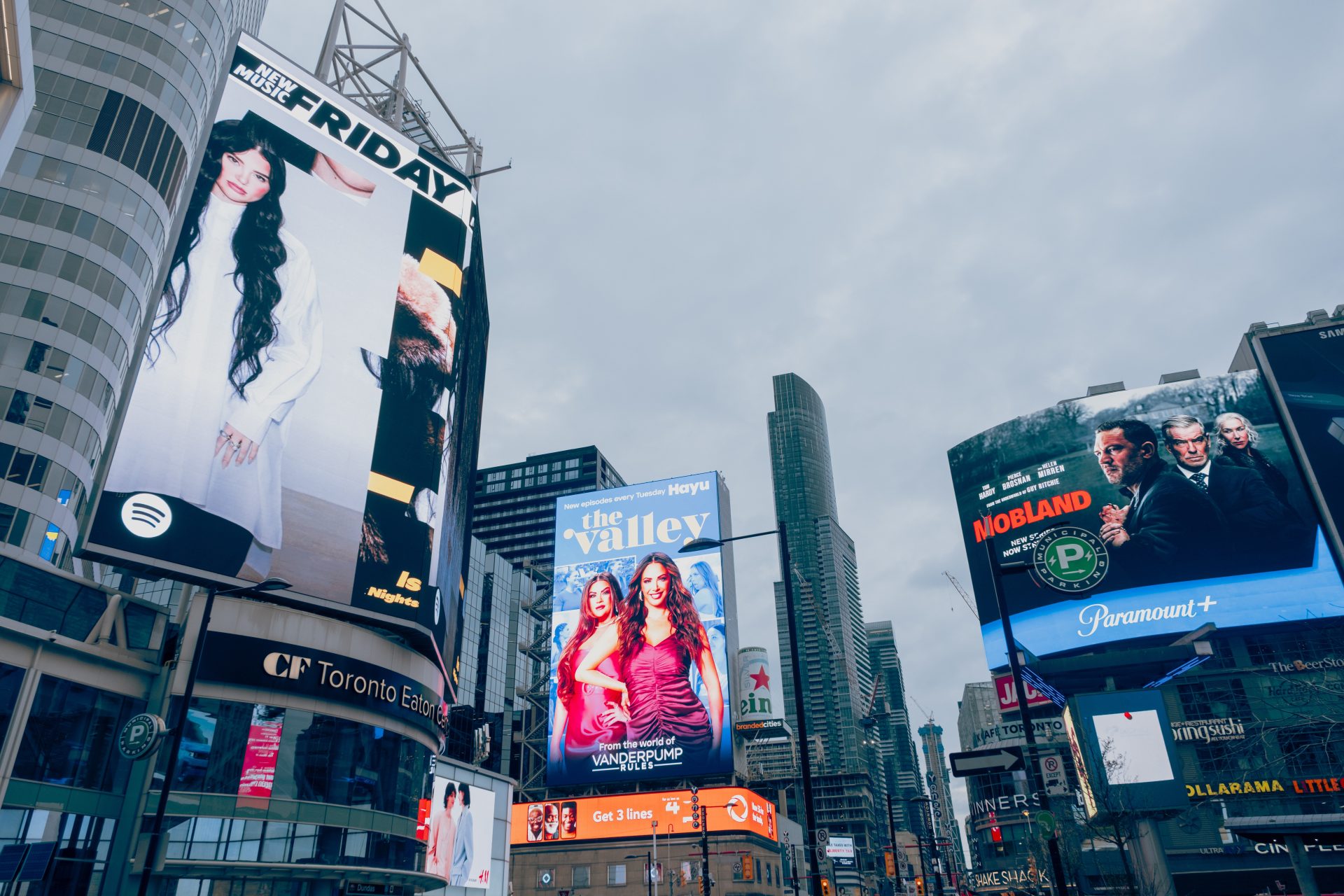
Programmatic digital out-of-home (DOOH) advertising is becoming a more established part of the media landscape, with advertisers spreading their spending across more industries, locations, and types of campaigns.
That’s according to Broadsign’s 2026 Programmatic DOOH Trends Report, which analyzed advertising transaction data from 2025 and the first quarter of 2026. The data comes from Broadsign and Place Exchange, together representing more than 1.7 million digital screens and over 1.5 trillion available ad views each month.
The report shows that advertisers are no longer treating digital outdoor advertising as a niche channel, and the advertiser mix reflects a channel that has proven its value across businesses—a sign of a maturing market.
Key findings:
- Food and drink advertisers spent the most: They accounted for 18.5 per cent of spending in 2025, followed by shopping at 11.8 per cent.
- Finance and technology were also major users: Personal finance accounted for 10.5 per cent of spending and technology 8.9 per cent.
- Outdoor advertising still dominates: Traditional outdoor locations made up 48.4 per cent of spending. Retail followed at 18.5 per cent, with transit at 12.7 per cent and entertainment venues at 10.4 per cent.
- Advertisers are settling on a few popular screen formats: Two video sizes accounted for 77% of all video spending (1080×1920 (vertical portrait) and 1920×1080 (landscape), while three display sizes—(1080×1920 (31.4 per cent), 1920×1080 (23.3 per cent), and 1400×400 (24.2 per cent)—represented 79 per cent of display spending.
- Buyers want more control: Nearly two-thirds (65.8 per cent) of spending went through custom private deals, allowing advertisers to choose specific screens and audiences. Another 20.5 per cent went through ongoing private deals.
The numbers point to a broader shift in how advertisers use DOOH media. While large outdoor screens remain important for reaching many people, brands are also looking for places where their messages make sense in the moment, such as stores, transit hubs, and entertainment venues.
Broadsign’s findings suggest DOOH has moved beyond its early-adopter phase. As more advertisers enter the market, the focus is increasingly on making campaigns easier to plan, buy, and measure.

Sign up for our newsletter
Featuring breaking news from Canada's sign and graphics industry.
Read the Latest Issue

