
Then and now: The wrap evolution
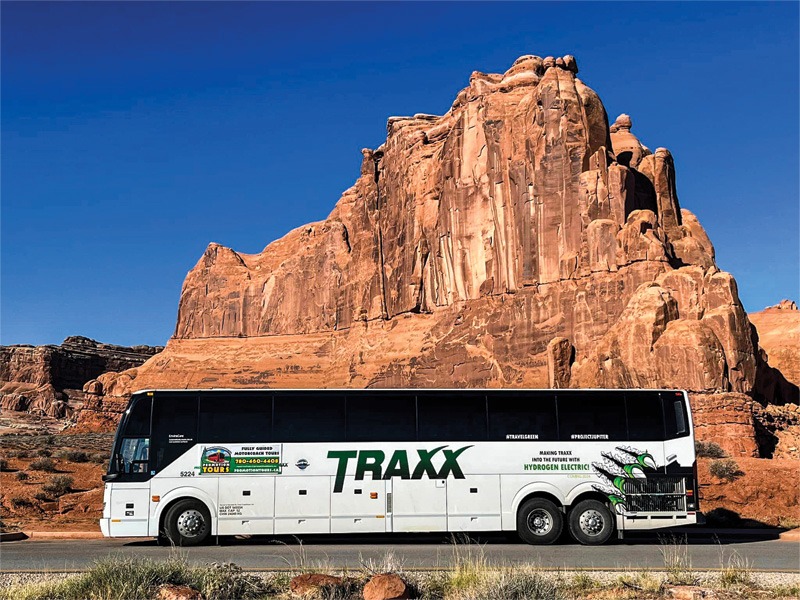
If you have been involved in the vehicle wrap world for a while, you already know how different things feel compared to the early days. In the past, wraps were exciting, but also unpredictable and could be very frustrating at times. The materials didn’t always behave the way you wanted, printers would be inconsistent even between two of the same model, and installers had to figure things out through trial and error, resulting in long nights and a pile of wasted material. Looking at where things are now, it’s amazing to see how far the industry has come. Wraps today are highly engineered products supported by advanced chemistry, consistent printing, better adhesives, and an installer community that drives real-world change. All these pieces have evolved together, and that’s part of what makes the wrap industry feel so different and more advanced today.
One of the most significant areas of change has been the films themselves. Modern cast films from companies like 3M, Avery Dennison, and ORAFOL are much more flexible, predictable, and stable than older materials. If you ever wrapped something in the early 2000s, you might remember fighting the material more than anything else. You would stretch a film into a deep pocket or around a curved panel, feel like you nailed it, and then watch it slowly creep back toward its original shape. Imperfections were tolerated even with seasoned installers because, at that time, the technology available was not meant to conform to the different shapes and recesses of a vehicle. Those issues came from the way films were cast and the other additives used at that time. When installers heated and stretched it, that tension reactivated later and pulled the film out of place.
Modern-day wraps
Films
Fast forward to today, newer casting processes allow manufacturers to create films with a much more consistent molecular structure. This creates a film that stays where the installer puts it.
Shrinkage has also improved dramatically. Early wrap films could shrink several millimetres over time, especially when exposed to heat cycles. This caused edges to lift and printed designs to warp. Now, manufacturers use resins that cure more evenly and carry far less internal stress—resulting in films that maintain their shape better and hold clean edges longer. For installers, this means fewer callbacks, fewer reworks, and more confidence on tricky surfaces. And for customers, it means wraps last longer and look better throughout their lifespan.
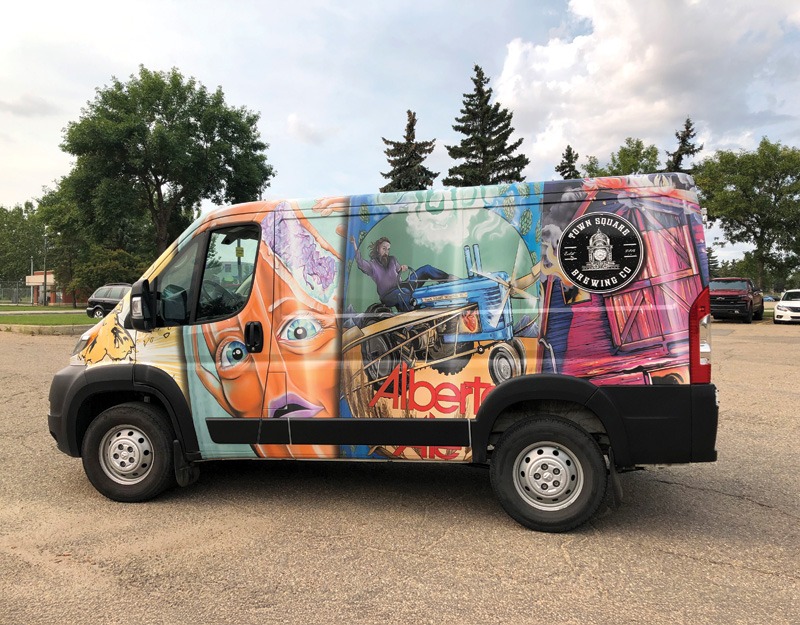
Another improvement is how modern films tolerate stretching without ruining the finish. Older gloss films dulled easily, matte films could get shiny, and metallic films lost their depth if stretched too far. New films hold colour and texture even under higher elongation. It’s not perfect—there are still limits—but installers now have more freedom to push the material into deeper channels or around sharper curves. This is important because modern vehicles are far more sculpted than they used to be. Cars, trucks, and especially electric vehicles (EVs) have sharper angles, deeper recesses, and more dramatic contours. Good films today are built to handle that complexity.
Adhesives
Adhesive technology might be one of the biggest reasons installations are smoother and faster than they were years ago. Micro airrelease adhesives, with their built-in channels, let trapped air escape easily during installation. Before this, installers often spent vast amounts of time pushing bubbles around or lifting and resetting large panels. Now, the film practically helps you lay it down. The adhesive systems used today also offer controlled tack, meaning the vinyl doesn’t grab aggressively the second it touches the surface. Installers can slide and adjust pieces before applying firm pressure to lock them into place. Modern adhesives are manufactured to respond predictably to heat, which helps installers finish jobs with confidence. Fleet work primarily benefits from this because uniform bonding strength across dozens of vehicles is crucial for maintaining consistency and durability.
Printing tech
Printing technology has grown right alongside film and adhesive improvements. Printers today are more precise, produce cleaner detail, and offer much better colour consistency. In the early days, it was common for printers to drift in colour output across long runs, requiring constant adjustments. Now, raster image processor (RIP) software and profiling tools give shops control that didn’t exist before.
Ink chemistry has advanced, too. Early inks would often crack when installers stretched the film around curves due to their low flexibility. Modern inks, especially latex and eco-solvent formulations, are built to stretch with the vinyl. Faster curing also helps shops work quickly. Latex inks cure almost instantly at high temperatures, while eco-solvent inks off-gas faster than older formulas. That means installers can laminate and install sooner without worrying about solvent bubbles, resulting in quicker turnaround times or those moments when a quick reprint to meet deadlines is needed.
The making of a skilled installer
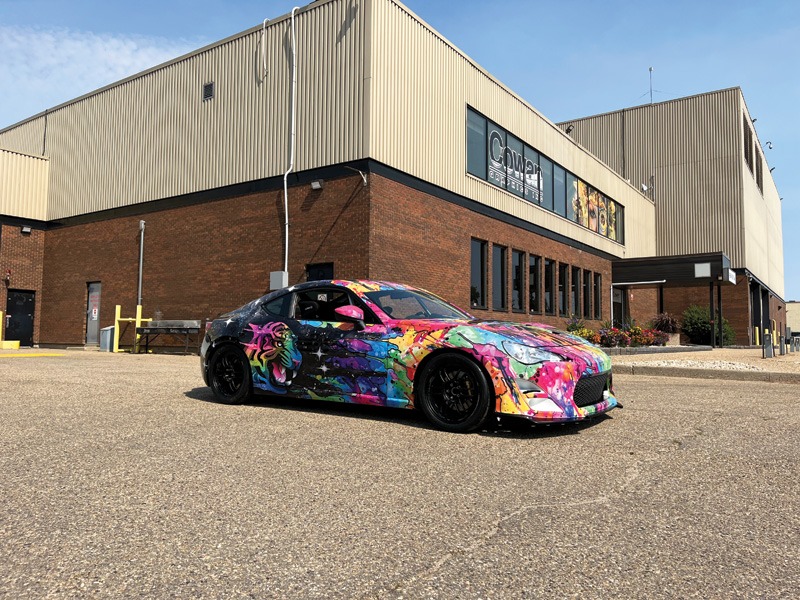
Even with all the material science and technological improvements, installers remain the heart of the industry. They’re the ones who test these materials in real-world environments with different variations in temperature, cleanliness, and space. Manufacturers rely on installers to push the limitations of new advancements in films and ink chemistry. Installers figure out what works and what doesn’t, which techniques make the material too far, and which tools give the best results. They help identify issues like uneven tack, unpredictable stretch, or poor heat recovery that manufacturers might not catch in controlled testing. That feedback has driven countless improvements in adhesives, backing liners, film memory, and heat response.
Certification programs reinforce this collaborative cycle. Programs from 3M, Avery Dennison, ORAFOL, and others help installers learn the technical reasons behind film behaviour. Installers come out of these programs more skilled and better informed. At the same time, manufacturers benefit from receiving constructive feedback that helps shape the next generation of films. This back-and-forth collaboration between installer and manufacturer is one of the biggest reasons the industry has grown so quickly.
Integration
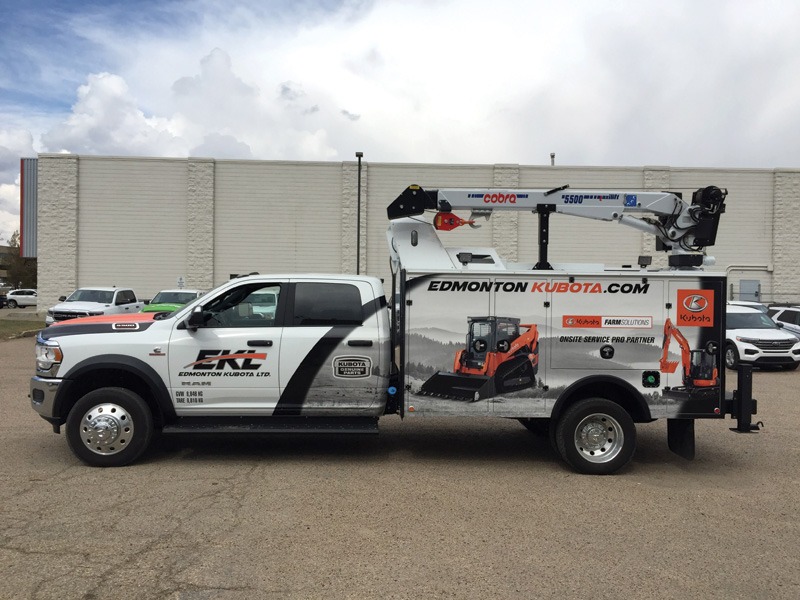
However, the most interesting part of the modern wrap industry is perhaps how connected everything has become. Ten or 15 years ago, improvements in film might have happened completely separate from whatever printers or adhesive companies were doing. A new film might come out, but the printers weren’t advanced enough to absorb ink consistently. Today, the industry works almost like an ecosystem where every improvement automatically pushes another part of the industry forward. When one piece evolves, everything else shifts with it almost instantly. Better films require better inks because installers can now stretch the film deeper into a panel, and the ink has to stretch with it without cracking. And when inks become more stretchable, film manufacturers start engineering topcoats that hold colour more evenly under that extra stress.
Then installers step in as soon as they see what the new materials and inks can handle; they develop new techniques that never would have worked in the past. Things like aggressive triangle tension methods, pre-stretching bumpers in one piece, and deep channel bridge techniques. When installers start pushing limits like that, they send feedback right back up to the manufacturers. That feedback drives the manufacturers into another round of innovation, which causes the cycle to go around again.
A connected evolution
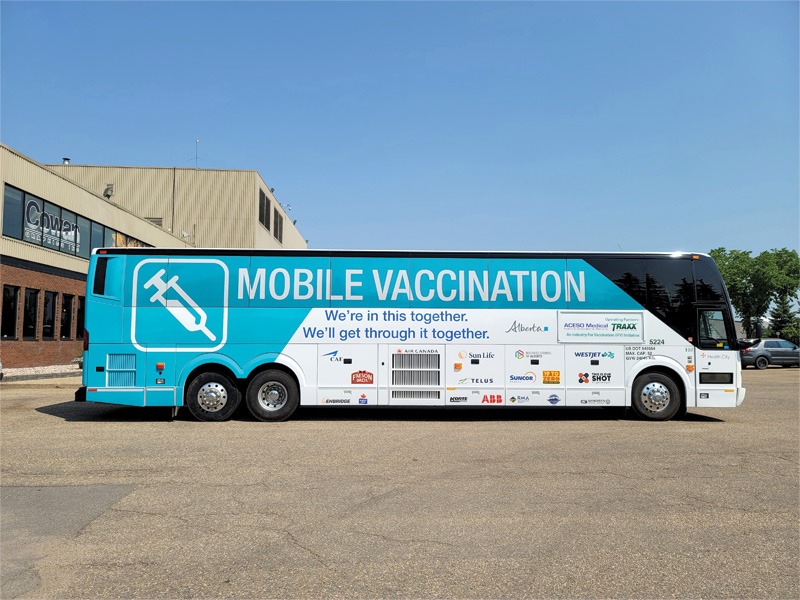
You can see this ecosystem effect in all kinds of real-world examples. When Avery Dennison released its Supreme Wrapping Film with lower memory and smoother liners, printers like HP and Roland had to adjust International Colour Consortium (ICC) profiles because the ink was sitting differently on the new topcoat.
When 3M released the 2080 series with a more compliant cap layer, installers started doing entire bumpers in one piece more consistently, which then forced adhesive chemists to improve bonding strength along extreme curves. When great detail commercial wraps became more common, shops needed faster production without losing colour accuracy, so printer companies introduced variable dot technology to sharpen edges without banding. And when latex printers got fast enough for same-day print and install workflows, film manufacturers had to make topcoats that could accept latex ink while still stretching cleanly without cracking. It’s all connected in a way that wasn’t happening before.
The improvements feed into each other in a cycle that keeps raising the bar for all industries involved. This ecosystem effect is one of the biggest reasons the wrap industry evolves as fast as it does. No single part of the industry is developing in isolation anymore. Every breakthrough influences the next, and that shared momentum is what keeps pulling the entire wrap world forward, year after year.
Economics
This connected evolution has also changed the economics of wraps. Colour change wraps used to be a premium service that only a small group of customers even considered. Today, wraps have become far more mainstream. People choose wraps for personalization, paint protection, or simply because they want to change the look of their vehicle without committing to a permanent paint job.
For fleet operators, the benefits are even bigger. Wraps offer consistent branding across vehicles, quick turnarounds, and easier removal when designs or branding change. Vehicles spend less time off the road, which translates directly into operational savings. Wraps also offer design flexibility that paint cannot match.
No single improvement stands alone. When materials get better, printing improves; when printing improves, installation standards rise; when installers push the limits, new materials are engineered. This ecosystem effect makes each part of the industry a force that drives the others forward into the future.
Andrew David is the production manager at Burke Group of Companies.
Sign up for our newsletter
Featuring breaking news from Canada's sign and graphics industry.
Products
Read the Latest Issue
