
The reinvention of digital signage in 2026
The Canadian digital signage industry is entering a new phase of maturity in 2026. After more than a decade of rapid hardware evolution, the sector is shifting towards other considerations, such as better reliability, scalability, and integration.
Canadian projects bring both challenges and opportunities. Long deployment distances, extreme weather conditions, and limited availability of skilled labour increase complexity. At the same time, there is strong untapped demand in secondary markets and a growing advantage for local players capable of supporting projects across the country.
This creates a unique context for Canadian manufacturers and integrators. The emphasis is increasingly on reliability, serviceability, and weather resistance, rather than on deploying unproven, cutting-edge display technologies.
While LED performance continues to improve in areas such as resolution and brightness, the most meaningful changes for Canadian sign manufacturers are happening elsewhere: in deployment models, Artificial Intelligence (AI), remote management, architectural integration, and energy efficiency.
For manufacturers, integrators, and installers, understanding these shifts is essential. The competitive landscape is no longer defined solely by specifications, but by the ability to deliver robust, scalable, and intelligent display ecosystems.
The decentralization of LED
From flagship installations to national networks
One of the most significant transformations in recent years is the decentralization of direct-view LED (DV-LED), a trend particularly relevant in Canada given the country’s geographic scale.
Historically, LED displays were reserved for large, iconic installations such as stadiums, flagship retail locations, or major outdoor advertising sites. Today, improved reliability, lower costs, and simplified deployment are enabling LED to expand into distributed, network-based applications.
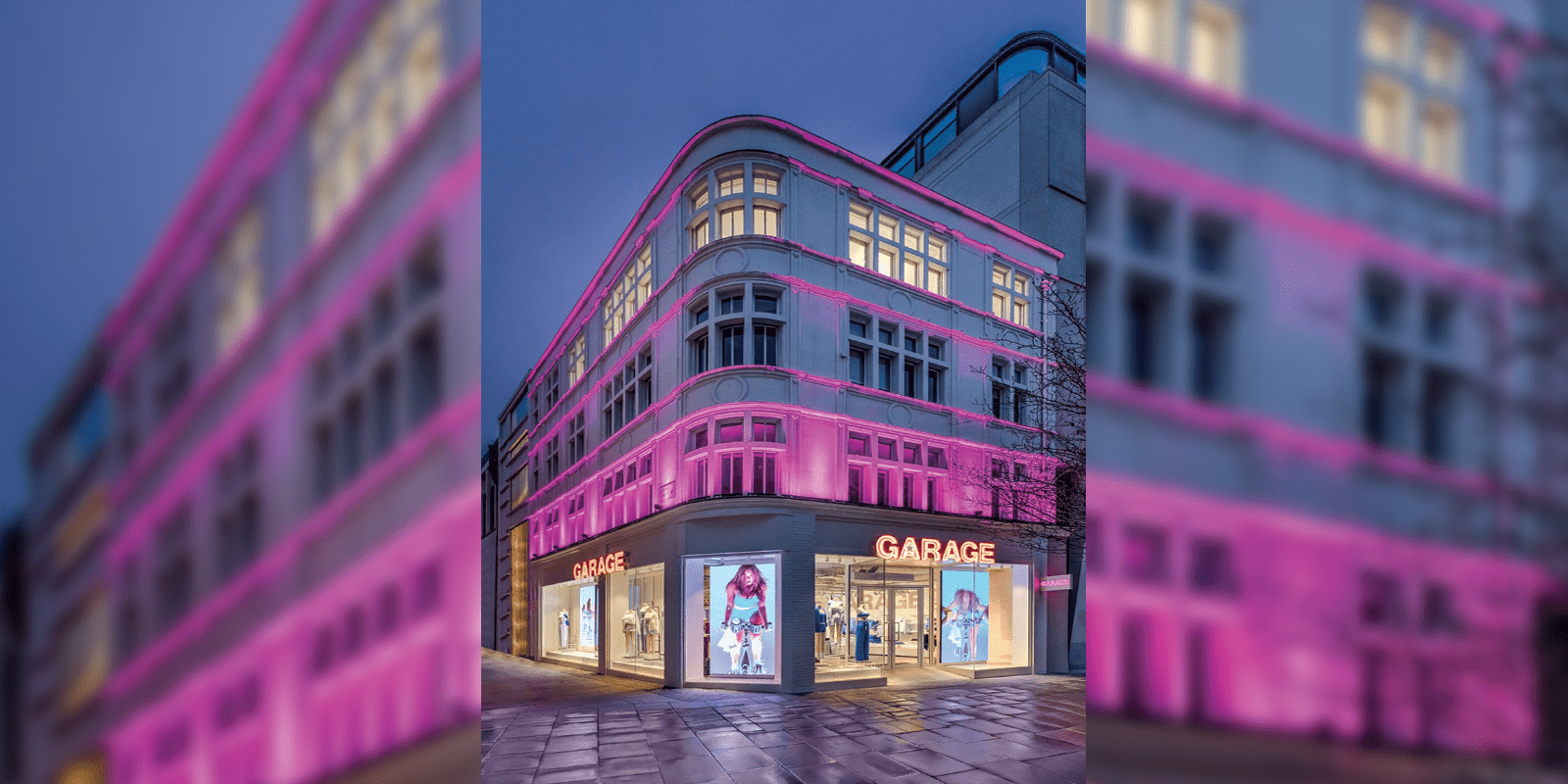
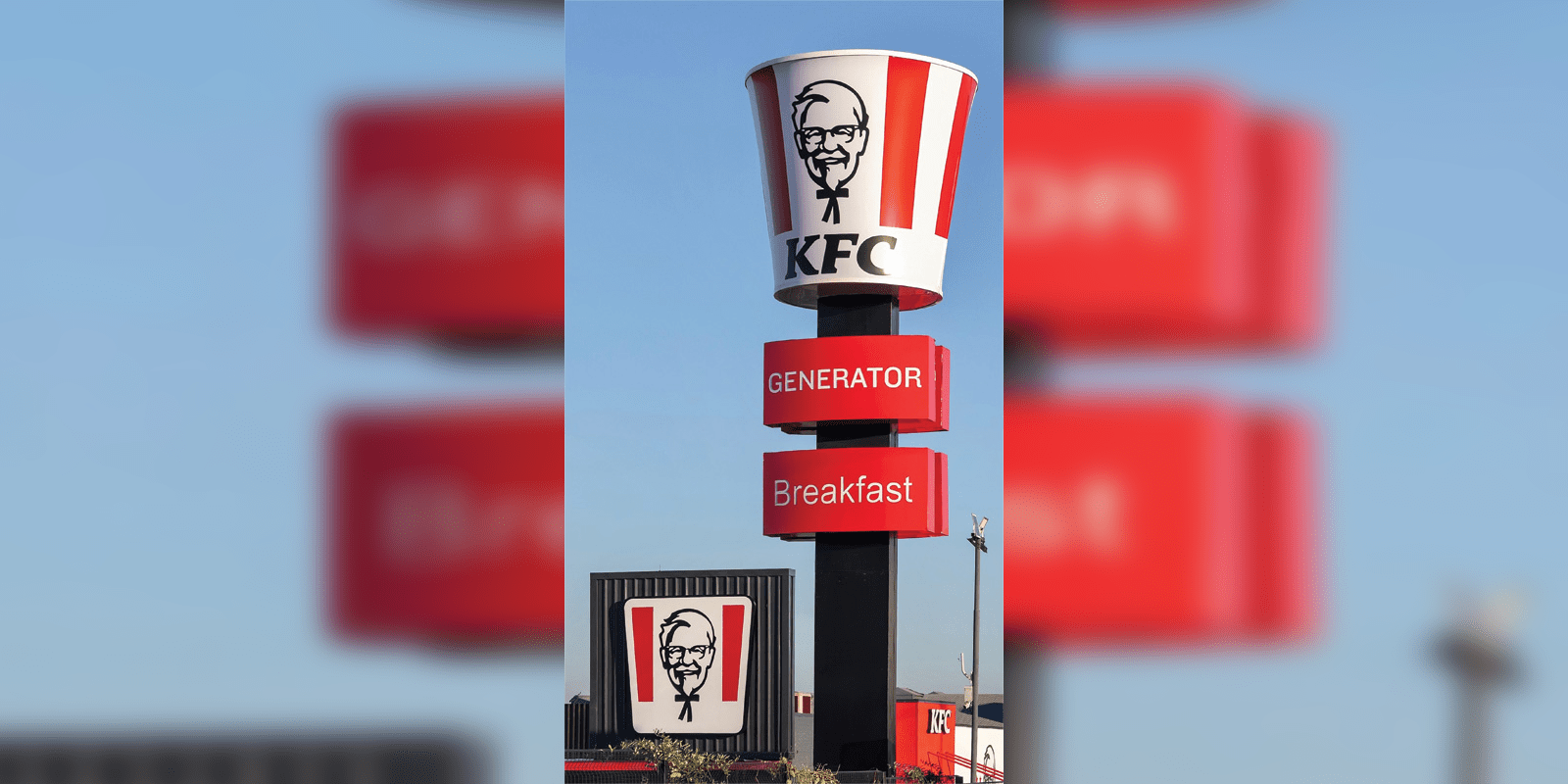
National rollouts are becoming common across sectors such as fuel station networks, quick-service restaurants (QSRs), retail chains, and automotive dealerships. Instead of a few large installations, organizations are deploying hundreds or thousands of standardized units across multiple locations.
This shift has several implications:
- Certification and compliance are critical
Large-scale deployments require strict adherence to CSA Group, UL, and other regulatory standards. Buyers are less willing to accept risk when installations are replicated across entire networks.
- Local presence is a competitive advantage
Clients increasingly expect local support for installation and service. Canadian-based manufacturers and integrators benefit from proximity, especially compared to foreign competitors entering the market.
- Standardization drives efficiency
Modular designs, repeatable configurations, and simplified installation processes are essential to scaling deployments profitably.
LED is no longer a niche solution—it is becoming infrastructure.
Resolution and brightness
Incremental gains, strategic optimization
Despite ongoing improvements, resolution and brightness are no longer the primary differentiators they once were.
Pixel pitches continue to decrease, and brightness levels remain strong, particularly for outdoor applications. However, these gains are increasingly constrained by cost considerations. For most use cases, performance has reached a “good enough” threshold.
The industry is now focusing on optimization rather than maximum specifications.
Key developments include:
- Closer viewer proximity
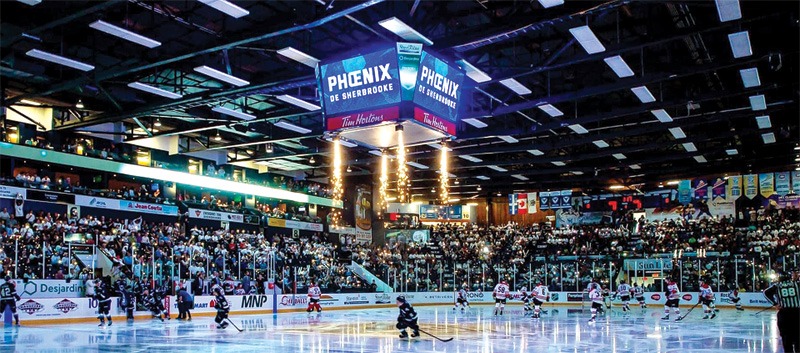
Higher resolution allows displays to be installed closer to audiences, particularly in retail environments, but also in public transit and other applications.
- Directional brightness control
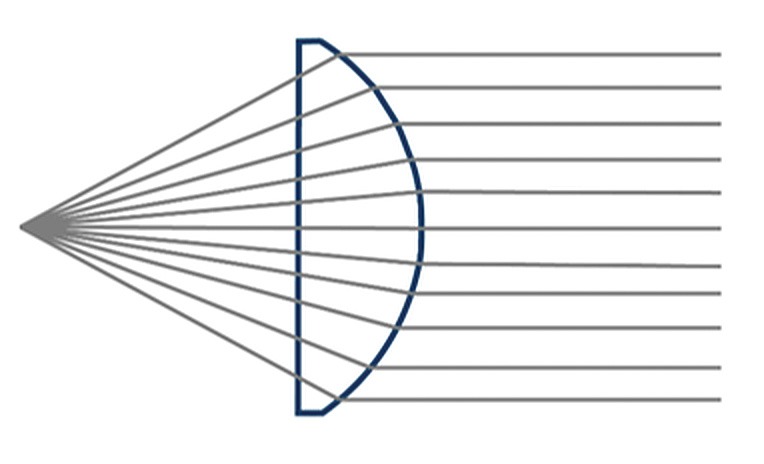
Optical solutions such as louvres and lenses improve light efficiency and reduce spillover. This is particularly important in Canada, where lower ambient light levels in less dense areas make light pollution a more sensitive issue. Controlled brightness can also help secure permits by limiting impact on nearby residential zones.
- Environmental considerations
Electromagnetic emissions, waterproofing, and durability continue to influence design, especially for outdoor installations.
The result is a more balanced approach—where performance is tailored to the application rather than pushed to technical extremes.
Interactivity and AI
From content to systems
AI is rapidly transforming digital signage, with impacts extending far beyond content creation.
While AI-driven content generation is already well established, the next wave of innovation focuses on interactivity and system optimization.
Emerging applications include:
- Audience-aware displays
AI enables real-time analysis of audience demographics and behaviour, allowing content to adapt dynamically.
- Monetization optimization
Advertising networks use AI to optimize scheduling based on performance, time of day, and engagement.
- Enhanced interactivity
Touchless interfaces, gesture recognition, and personalized experiences are increasing engagement.
- Design and manufacturing support
AI is also influencing upstream processes, including product design optimization, predictive maintenance, and increased factory automation.
For manufacturers, this represents a shift toward more intelligent production systems. For integrators, it means delivering solutions that function as responsive platforms rather than static displays.
Redundancy and remote monitoring
Toward zero downtime
As LED deployments scale across large geographic areas, uptime becomes critical—particularly in Canada.
A failure at a single location may be manageable, but when it’s across a national network, it becomes a systemic issue. With installations often located far from service centres, each intervention carries a high cost and delay.
As a result, redundancy and remote monitoring are now central to system design.
Key capabilities include:
- Real-time diagnostics and alerts
Systems detect faults instantly, allowing rapid response before issues escalate.
- Remote intervention
Many problems can be resolved without on-site visits, reducing downtime and operational costs.
- Predictive maintenance and route optimization
Data-driven scheduling allows service teams to plan interventions efficiently across large territories.
These capabilities are driving a shift from reactive to proactive service models. For integrators, this opens opportunities for long-term service contracts and value-added offerings.
Architectural Integration
When displays become buildings
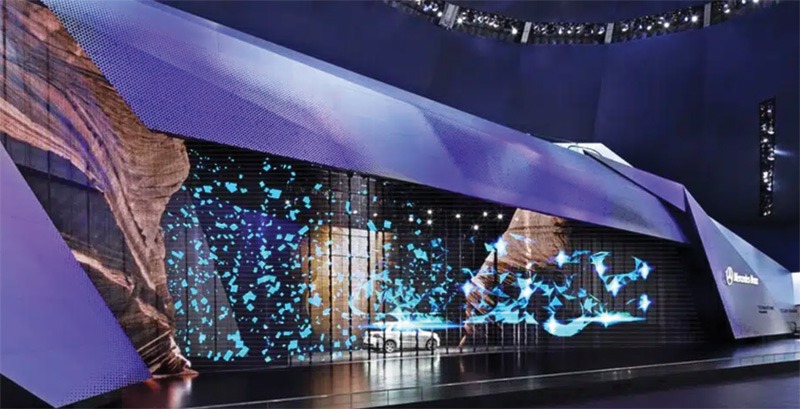
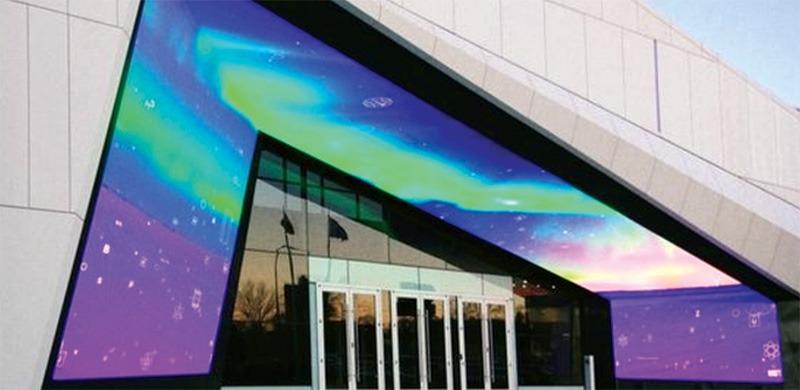
LED displays are increasingly being integrated into architecture rather than treated as standalone elements.
Displays can now be incorporated directly into building envelopes, including façade systems and even glass curtain walls.
Key developments include:
- Curved and custom forms
Advances in cabinet design and flexible modules enable non-standard shapes.
- Seamless façade integration
LED is being embedded into architectural skins, particularly in high-visibility environments such as automotive dealerships.
- Early-stage collaboration
Projects increasingly require co-ordination between signage providers, architects, and engineers from the design phase.
In Canada, this integration must also account for environmental factors such as snow accumulation, wind loads, and thermal expansion. Structural integrity and durability are as important as visual performance.
Digital signage is no longer simply installed—it is engineered into the built environment.
Energy efficiency
From constraint to competitive advantage
Energy efficiency has become a central design priority, driven by rising energy costs, environmental regulations, and sustainability goals.
This is particularly relevant in Canada, where climate conditions and energy demands can be significant.
Key innovations include:
- Component optimization
Operating components below maximum capacity improves efficiency and lifespan.
- Advanced chip design
High-efficiency LEDs and driver integrated circuits (ICs) reduce power consumption.
- Common cathode architecture
This approach significantly improves efficiency compared to traditional designs.
- Content optimization
Reducing white content and optimizing colour usage lowers energy consumption.
- Passive heat dissipation
In colder climates, passive cooling can reduce the need for energy-intensive systems.
- Renewable energy integration
Solar-powered solutions are emerging in remote or off-grid applications.
Energy efficiency is no longer just a cost consideration—it is a key factor in competitive positioning.
From displays to intelligent infrastructure—a Canadian perspective
The digital signage industry in 2026 is no longer defined solely by display technology. It is shaped by the convergence of AI, networked systems, architecture, and energy management. In Canada, this evolution is further influenced by geography, climate, and operational realities.
Canada is not just another market—it is a demanding test environment.
Reliability is a non-negotiable requirement. With installations often located hundreds or thousands of kilometres from service centres, downtime carries a significant operational and financial impact. This places a premium on redundancy, remote diagnostics, and predictive maintenance.
Climate adds another layer of complexity. Outdoor systems must withstand extreme cold, snow, moisture, and rapid temperature changes. Displays not specifically engineered for these conditions face increased risk of failure due to material stress, moisture ingress, and thermal cycling.
As a result, there is a clear distinction between products that are simply outdoor-rated and those designed specifically for Canadian winters. The latter incorporate robust sealing, cold-resistant materials, and structural designs capable of handling wind and snow loads. It is important to have designs made by people who have experienced snow firsthand!
The Canadian market also reinforces the importance of long-term performance over short-term innovation. Systems must operate reliably across all conditions—not just under ideal circumstances.
Ultimately, Canada rewards engineering excellence. It exposes weaknesses in design and execution more quickly than milder markets, but it also validates solutions that are truly robust.
As digital signage continues to evolve into intelligent infrastructure, the key question is no longer what a display can do—but how reliably it can perform over time.
In Canada, success will depend not only on innovation but on resilience.
Carl Breau is the CEO of Nummax and a business mentor with NextAI since 2021, supporting Canadian AI startups. Breau presented a version of this article at the Quebec Sign Association (Association Québécoise de l’Industrie de l’Enseigne/AQIE) conference in March 2026.
Sign up for our newsletter
Featuring breaking news from Canada's sign and graphics industry.
Products



Read the Latest Issue

