
The future of the storefront
How AI and real-time feedback transform digital signage

For decades, the primary goal of out-of-home (OOH) advertising and physical storefront signage was simply to broadcast a message to as many people as possible. From traditional printed posters to the introduction of high-definition digital screens, the technology has evolved rapidly, but the communication has remained strictly one-way.
Today, that paradigm is shifting entirely.
Modern consumers no longer make purchasing decisions based solely on a branded graphic or a clever marketing slogan. They rely heavily on social proof. They check their phones for star ratings, read peer reviews, and look for authentic validation before they even decide to walk through a door. Currently, the most valuable asset a brick-and-mortar business possesses is its online reputation. Yet, historically, that reputation has been completely invisible to the pedestrian walking right past the physical storefront.
By integrating artificial intelligence (AI) into digital signage, the industry is finally bridging this gap. We are entering an era where digital displays are no longer just static image carousels, but dynamic, real-time trust-building engines.
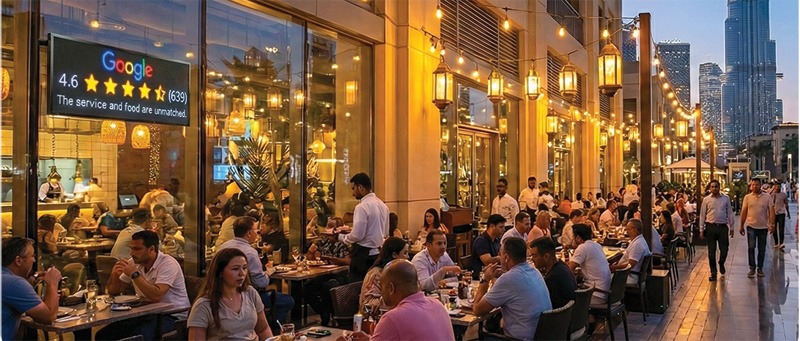
The shift from static advertising to dynamic trust
In the past, updating a digital display with positive customer feedback was a tedious, manual process. A marketer or store owner would have to design a graphic, export it, and push it to a media player. By the time the review hit the screen, it was already weeks old and lacked the authentic feel of a live digital ecosystem.
The modern consumer demands real-time authenticity. When a restaurant, retail shop, or service provider can broadcast their live online ratings directly to the street, they fundamentally change the nature of their signage. It stops being a mere advertisement and becomes a live community endorsement. The display acts as a transparent window into the experiences of hundreds of past customers, instantly establishing credibility with whoever is standing on the sidewalk.
The role of AI in real-time communication
The true breakthrough in this space is not just the physical hardware, but the intelligence running behind the glass.
AI is what makes this real-time communication possible at a commercial scale. Instead of a human manually sifting through various review platforms to find the best customer quotes, AI algorithms can automatically ingest a live feed of feedback. The AI actively analyzes the sentiment, filters out irrelevant or inappropriate content, and summarizes long paragraphs into punchy, highly readable quotes designed specifically for pedestrians walking by.
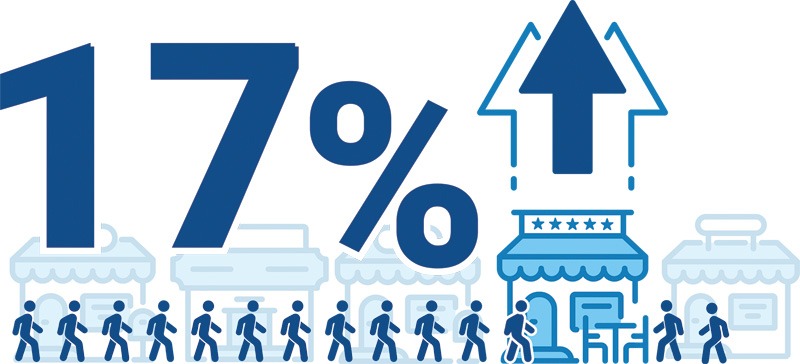
This means the digital display is constantly refreshing itself with the absolute best, most relevant social proof, completely autonomously. The signage reacts to the business’s real-world performance in real-time, keeping the messaging relentlessly fresh without requiring any daily manual input from the business owner.
Converting social proof into foot traffic
Ultimately, the goal of any storefront innovation is to drive tangible revenue. Integrating AI-driven social proof into window displays capitalizes on a very powerful psychological trigger: the safety of the herd.
When a pedestrian is choosing between two adjacent businesses, a static promotional poster does very little to sway them. However, a high-brightness commercial display actively broadcasting that hundreds of locals have highly rated the establishment creates an undeniable gravitational pull. It captures the consumer exactly at their moment of decision and entirely removes the friction of them needing to pull out their smartphone to research the business and its competitors.
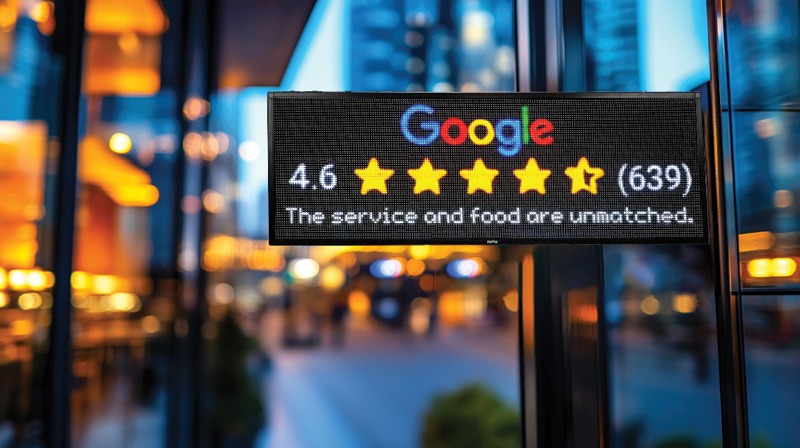
This intelligent, feedback-loop approach to OOH displays is actively proving to drive significant, measurable lifts in foot traffic across the retail and hospitality sectors.
The road ahead for the signage industry
As we look to the future of the Canadian signage landscape, the physical hardware will undoubtedly continue to get thinner, brighter, and more weather-resistant. But the true, transformative value for our clients will lie in the software integration.
By embracing AI, the industry can offer business owners far more than just a screen. We can offer them an active, intelligent communication system that turns their hard-earned online trust into immediate, physical walk-ins. The future of the storefront is no longer just about being seen. It is about being believed.
Nico Manalo is chief marketing officer at Intellino.
Sign up for our newsletter
Featuring breaking news from Canada's sign and graphics industry.
Products



Read the Latest Issue
