
Niagara Takes Flight: The science of immersion
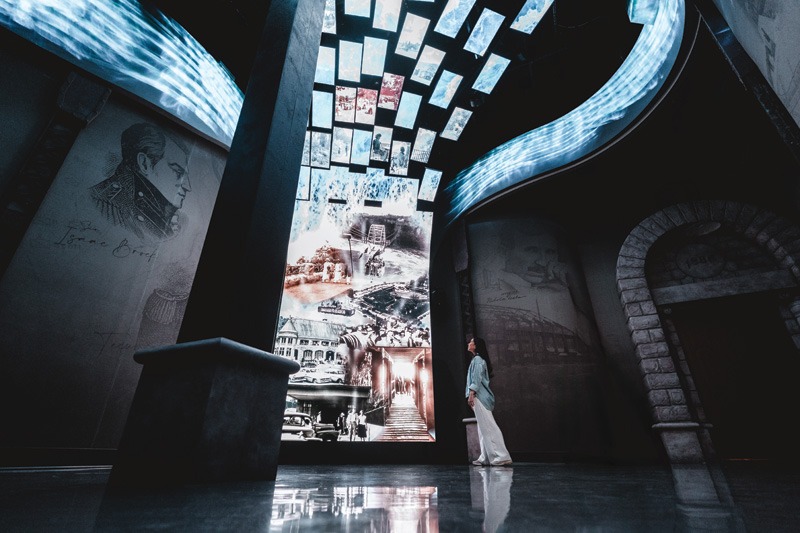
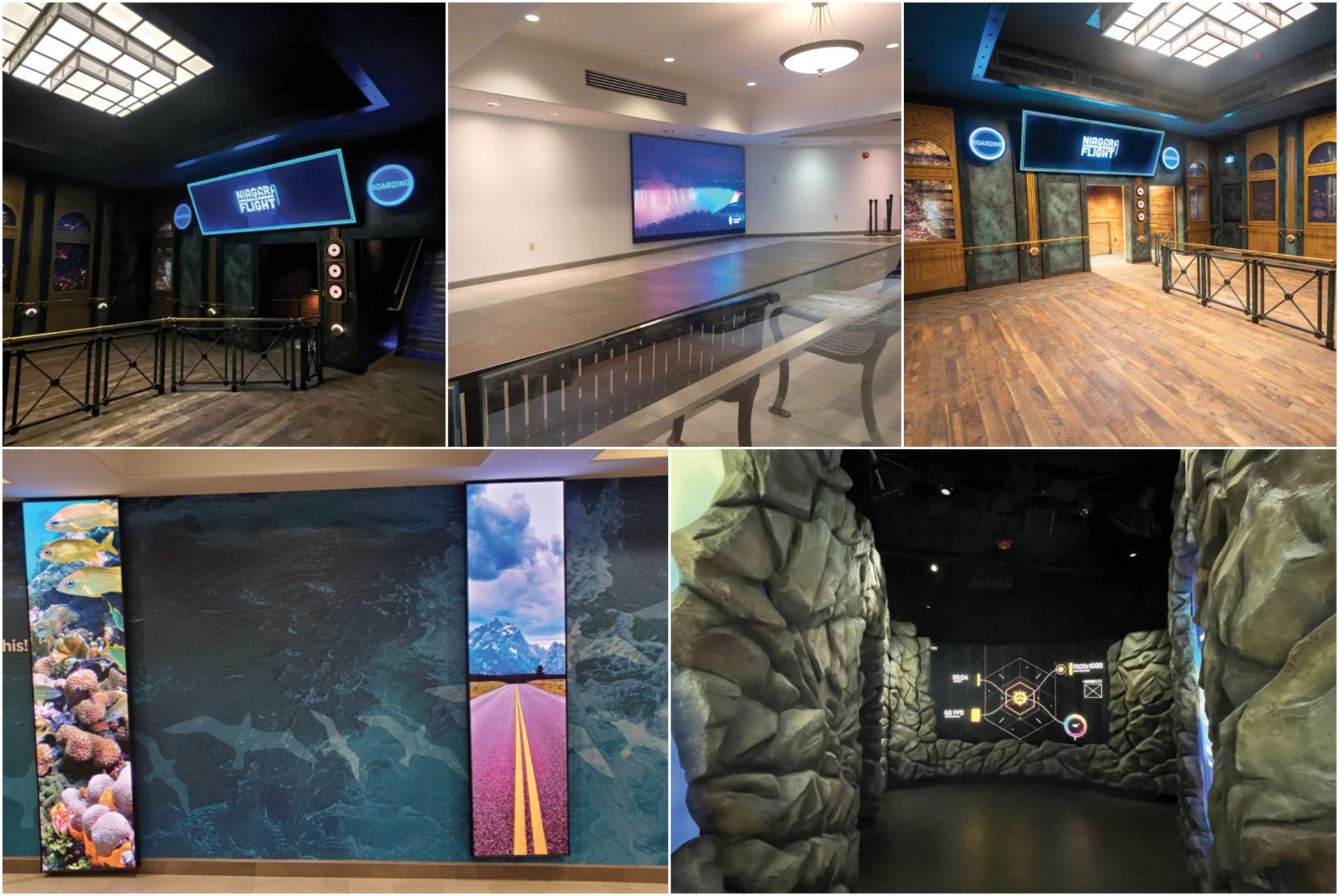
This is a project that lit the way to adventure. Media Resources partnered with Branch Audiovisual, whose client was Niagara Parks, to deliver a series of high-performance LED display systems for the immersive attraction of Niagara Takes Flight located at the Table Rock Centre in Niagara Falls, Ont. The project involved supplying and installing indoor LED displays across both the pre-show and post-show environments, as well as throughout key transition areas, including installations within the Table Rock Centre and connecting hallways. These displays play a critical role in shaping the visitor’s journey, helping to build anticipation prior to the ride experience and extending the storytelling beyond the main attraction. By integrating advanced digital display technology into the physical environment, the project enhances the overall guest experience through dynamic visual engagement, seamless content delivery, and immersive storytelling.
Control, quality, responsiveness
Media Resources was engaged by Branch Audiovisual, who selected our team based on our ability to deliver a fully integrated LED solution, from design and engineering through to manufacturing and installation. As a Canadian company with in-house engineering, module plant, and manufacturing capabilities, we offer a level of control, quality assurance, and responsiveness that is highly valued on complex projects of this scale. Our local presence also provides a significant advantage in terms of ongoing service, maintenance, and rapid support, particularly for high-traffic, year-round tourist destinations like Niagara Falls. Branch Audiovisual recognized our ability to deliver not only high-performance LED technology with our TruVIEW Fine Pixel Pitch product, but also a turnkey execution model, ensuring consistency from concept through to final commissioning. This combination of technical capability and local support made us a strong partner for their project.
Co-ordination and engineering
The project timeline began in the summer of 2024, with early co-ordination, engineering, and planning phases aligning with the broader development of the attraction. Fabrication and system preparation progressed alongside construction, ensuring that all display components were ready for integration within the evolving site conditions. Installation and commissioning were completed by the spring of 2025, in alignment with the final stages of the attraction buildout and prior to opening.
Fine pixel pitch
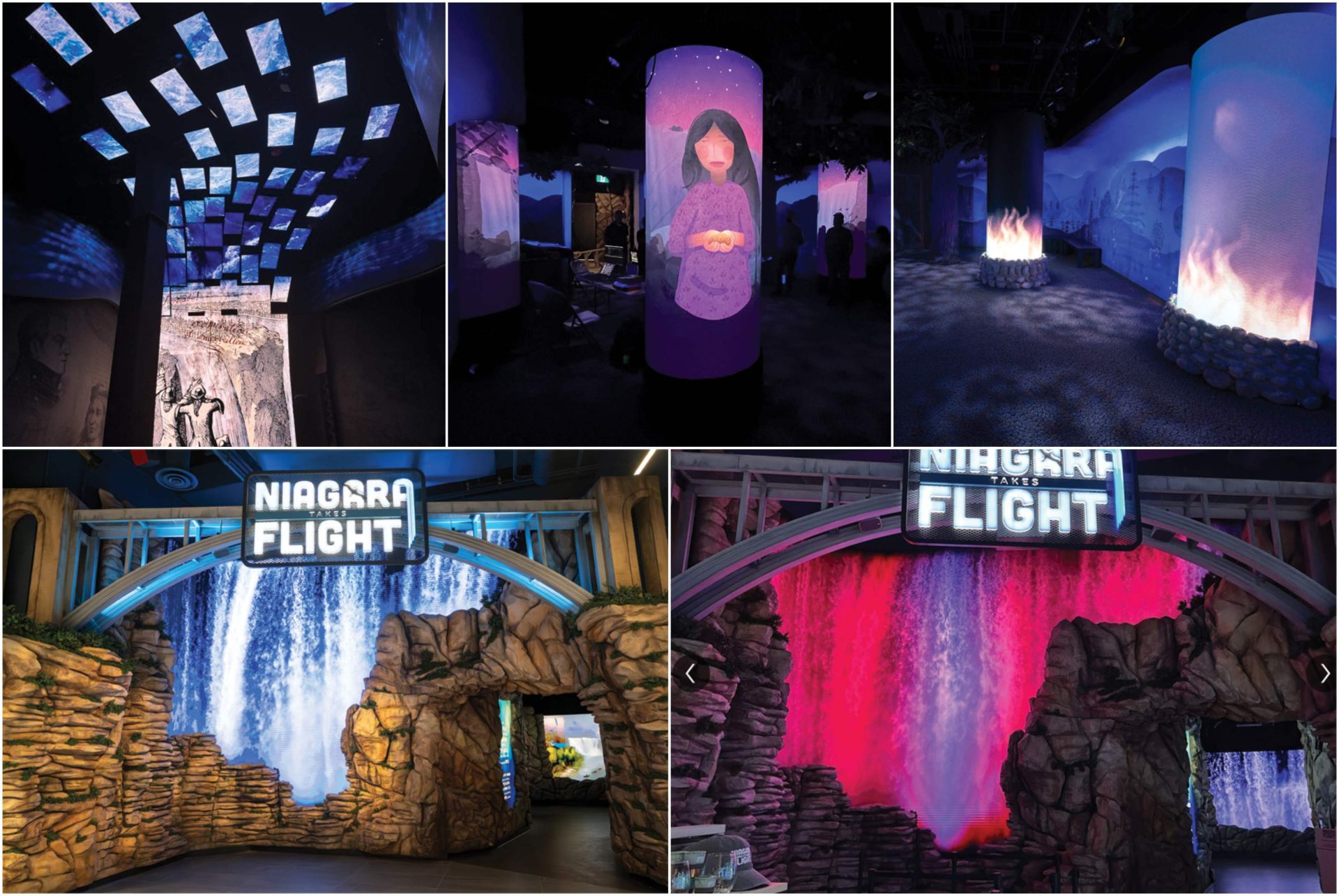
The scope of the project included the delivery of a diverse range of fine pixel pitch indoor LED display solutions across multiple areas of the attraction, each with unique spatial and experiential requirements. Within the Table Rock Centre, located just outside the main attraction, Media Resources installed five TruVIEW Flip Chip COB LED displays, designed to capture attention and engage visitors as they enter and exit the experience. Inside the Niagara Takes Flight attraction itself, a total of 11 LED displays were deployed, varying in size, configuration, and pixel pitch. These displays ranged from 1.56 to 1.87 mm (0.061 to 0.073 in.) pixel pitch, along with the integration of flex technology, allowing for creative freedom in shaping the displays to the environment.
The installations included:
- Curved LED walls/marquee displays
- Full and partial column wrap displays
- Ceiling-mounted displays
- Traditional wall-mounted displays
Each application required a tailored engineering approach to ensure seamless integration into the architectural design. The variety of display types highlights the complexity of the project and demonstrates the ability to adapt LED technology to non-traditional surfaces and immersive environments.
Creativity and technology
The creative and experiential design for the project was developed by Branch Audiovisual’s design team, who established the visual direction and layout for the attraction.
Media Resources worked closely with Branch Audiovisual to translate these concepts into fully engineered LED solutions, ensuring that each display met both the creative intent and the technical requirements of the space. This collaborative approach allowed for precise alignment between design vision and execution, particularly in areas requiring custom shapes and complex integrations.
Precision engineering
The team fabricated the LED systems using advanced LED display technology and precision-engineered structural components.
The displays were constructed using:
- High-resolution LED modules
- Aluminum and steel extrusion frameworks for structural integrity
- Integrated NovaStar control systems for signal processing and content management
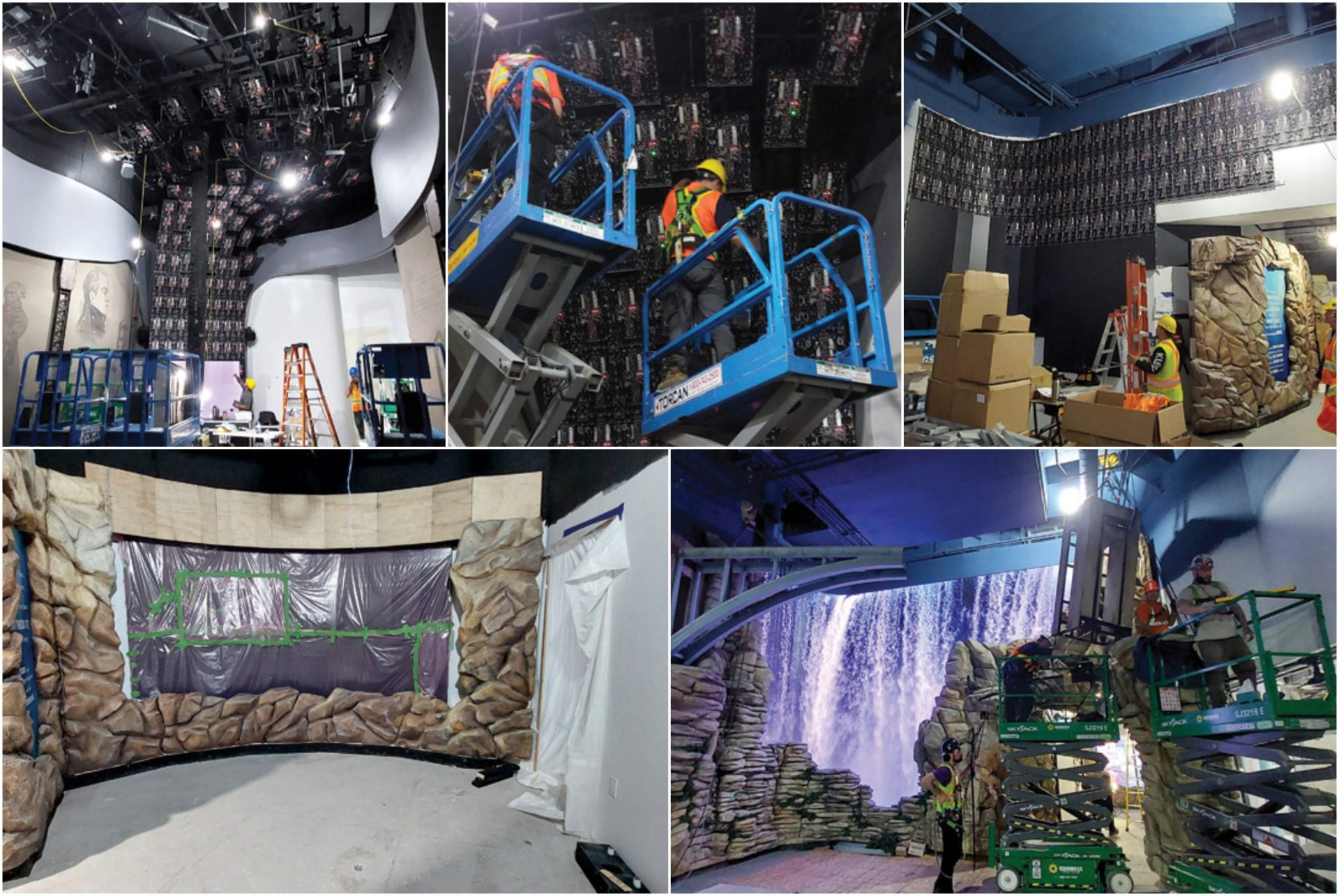
The team manufactured each display with a focus on durability, alignment accuracy, and long-term performance, ensuring consistent image quality across all installations. From a tooling and assembly perspective, the process involved the use of:
- Scissor lifts for access and positioning
- General hand tools for assembly and fastening
- Digital and laser levelling tools to ensure precise alignment across all display surfaces
Given the variety of display shapes and mounting conditions, the team carefully co-ordinated fabrication and preparation to ensure each system could be installed efficiently within the site constraints.
Adaptability and cohesion
As a highly customized and immersive installation, the project presented several challenges that required adaptability and close co-ordination across all teams involved.
One of the primary challenges was working within non-uniform architectural conditions, including uneven wall surfaces and varying structural materials behind finished drywall. These conditions require site adjustments to mounting strategies to ensure secure and accurate installation.
Additionally, design modifications during installation introduced the need for real-time problem-solving and flexibility. The team worked closely with Branch Audiovisual to adapt to these changes while maintaining the integrity of the overall design.
Complex transitions between surfaces also presented challenges, particularly in areas where:
- Two walls met at an inside corner requiring a seamless LED finish
- Displays transitioned from vertical wall surfaces to overhead ceiling-mounted elements
- The “waterfall room” required a continuous visual flow from walls to suspended ceiling displays
Maintaining a consistent visual experience across these transitions required precise alignment and careful calibration. Other challenges included:
- Tight working spaces with multiple trades operating simultaneously
- Navigating equipment and materials through multi-level environments
- Co-ordinating installation within a high-traffic public-facing tourist destination
The teams addressed these challenges through detailed planning, strong communication, and the experience that Media Resources and Branch Audiovisual brought to delivering complex, multi-stakeholder projects.
Attention to detail
The installation process followed a structured approach, beginning with the preparation of mounting surfaces and structural supports, followed by the staged installation of LED cabinets.
Using scissor lifts and precision levelling tools, installers carefully positioned and secured each cabinet to ensure proper alignment across the display surface. Given the complexity of curved, column-wrapped, and ceiling-mounted displays, installation required a high level of attention to detail at every stage.
Once physically installed, technicians connected all displays through integrated power and data systems and then configured the system using NovaStar control technology.
The final phase involved:
- Calibration of brightness and colour uniformity
- Signal testing across all display sections
- Content verification to ensure seamless playback
This process ensured that each display performed reliably and delivered a consistent visual experience across the entire attraction.
Partners, providers, stakeholders
The Niagara Takes Flight project demonstrates what collaboration between project partners, technology providers, and client stakeholders can achieve.
Working alongside Branch Audiovisual and Niagara Parks, Media Resources was able to deliver a solution that not only meets the technical demands of a complex installation but also enhances the storytelling and overall guest experience.
This project highlights the growing role of fine pixel pitch LED technology in experiential environments, where flexibility, reliability, and visual performance are critical to success.
Tony Da Silva is a senior manager of marketing and demand generation. Sidney Brownell is a marketing assistant for Media Resources Inc. Da Silva and Brownell drive Media Resources’ marketing and branding initiatives with a blend of experience and creativity.
With more than 30 years in the signage and communications industry, Da Silva leads strategic marketing and demand generation efforts, drawing from a diverse background, including national advertising campaigns and multimillion-dollar fundraising initiatives. Brownell brings a fresh, design-forward approach to the company’s digital presence, managing social media, content creation, and storytelling. Together, they align strategy with execution, amplifying Media Resources’ visibility and showcasing its technological innovations across North America.
Sign up for our newsletter
Featuring breaking news from Canada's sign and graphics industry.
Products
Read the Latest Issue
