
‘A launchpad of innovation’: Inside the forces transforming DOOH

The world around us is becoming more connected, more interactive, and increasingly digital—and digital out-of-home (DOOH) advertising is right at the centre of that transformation.
As new technologies continue to push the boundaries of creativity and engagement, DOOH is entering one of its most exciting eras yet.
Sign Media Canada caught up with the president and CEO of DPAA, Barry Frey, after the DPAA Canada Summit to explore the innovations shaping the future of DOOH—from programmatic growth and AI to the next generation of immersive experiences.
Sign Media Canada (SMC): What technologies are having the biggest impact on the evolution of DOOH today?
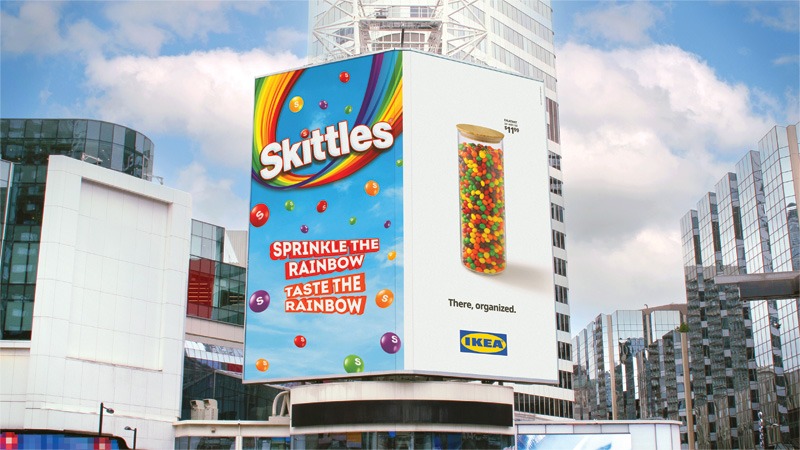
Barry Frey (BF): I like to say that DOOH is the “launchpad of innovation,” and for good reason. As we at DPAA drive the digitization of OOH, continued innovation and growth follow. From innovative data, research, and outcomes measurement up and down the funnel to 3D ads of all sizes (large formats in big public squares, or smaller screens in public transit systems); to dynamic content created and served by time, news, audience, weather—or even activated by consumer scanning a QR code and answering prompts from their phone; to the further integration of DOOH and mobile activations with AR and VR; to some of the wilder ideas like branded holograms, wall projections, and drone shows, DOOH is being impacted by technology every day. And I didn’t even mention AI yet. More on that to follow.
SMC: Programmatic DOOH has become mainstream. What’s driving its growth, and what’s still holding it back?
BF: Not only has programmatic become mainstream, but it has also been one of the key drivers of DOOH revenue as it becomes more available on more screens around the world. One big reason for this is the speed at which campaigns can be up and running (or creative swapped out for more up-to-date messaging), as well as the increasing ability to measure, buy, and plan them alongside other digital media. The only thing holding up the continued expansion of programmatic DOOH is the time it takes for all players across a digital network to align and stay in sync. Conversely, the further maturity of AI has helped accelerate the opportunities here.
SMC: Where do you see AI creating the biggest opportunities for DOOH, and where is the industry overestimating its impact?
BF: Measurement. Buying and planning. Efficiencies in systems for the whole workflow, from presentation to scheduling to outcomes. The creation of new tools that help analyze and strategize around new campaigns and new ideas. The sky is the limit. The industry, like many others, has overestimated the impact of generative AI as a replacement for creative and human ideation. But there’s no doubt that those who are using AI tools to deliver more value to brands and agencies are outpacing the rest.
SMC: What’s the biggest misconception about DOOH you’d like the industry to leave behind?
BF: DOOH is so much more than “outdoor, but digital.” It’s cinema advertising pre-shows. It’s in-store retail media networks. It’s IRL experiential activations around big sporting events like the World Cup. Too often, we paint ourselves into a box and don’t give enough credit to how wide a reach our networks have—from large, premium roadside signage, to mobile truck-side billboards; from the train you take to work, shop, or play, to the brand messages transmitted to you in the office elevator, in the store, or in the ballpark.
SMC: If you were giving one piece of advice to someone entering the industry today, what would it be?
BF: Get outside and touch grass, as my Gen Z coworkers and family members might say! AI (again, I know!) has been simultaneously disruptive and inspiring, but it cannot—and has not—changed the human experience, including the desire to be in-person, connected, putting down the phones and picking each other up with an inspiring real-world conversation, meeting, or experience. Join industry groups and network at their events. Even if an email or text message is easier, choose to take the meeting over Zoom (camera on!) or face-to-face. Be part of a community.
There’s no better way to not only grow as a professional or a person, but also to truly understand what motivates people and how to best connect with them from a business perspective, and to join in as brands connect with consumers in the real world!
SMC: Canada’s DOOH market is growing—and fast. What makes it unique, and where do you see the biggest opportunities over the next few years?
BF: Canada punches above its weight because it must. Its advertising audience is concentrated in a handful of dense urban corridors like Toronto, Vancouver, and Montreal, but scattered across a massive, bilingual, culturally diverse country. That forces us to be smarter about measurement, creative localization, and audience data than markets with more forgiving geography. And it’s working! DOOH revenue in Canada has been growing at a pace that outpaces many other traditional media, with programmatic now a mainstream part of the buy, not an experiment.
The biggest opportunity is convergence. Retail media networks are exploding in Canada right now, and pairing first-party data with DOOH’s in-store and en route physical reach is a huge unlock for brands.
I’d also point to how Canadian brands are using DOOH to show up authentically in cultural moments. Justin Bieber’s team synchronized DOOH placements across Toronto, Vancouver, and Montreal for an album launch last year, and fans carried it straight onto social. That’s the playbook: don’t just buy space, buy into a moment. Add in the momentum from hosting FIFA World Cup matches in Toronto and Vancouver this summer, and Canada has real proof points that this medium drives outcomes, not just awareness.

SMC: By the time next year’s DPAA Canada Summit arrives, what changes do you expect the industry to go through?
BF: A few things I’d bet on.
First, programmatic DOOH in Canada will have closed even more of the gap with the U.S.—the infrastructure and buyer sophistication are catching up fast, and I expect measurement standards to be further along, too.
Second, I think retail media and DOOH will be talked about less as two channels and more as one connected strategy. Brands are already blending them, and by next summer, that won’t be the exception; it’ll be the expectation.
I also expect AI to have moved from buzzword to backbone—not replacing creative, but powering the planning, buying, and real-time optimization behind it, the same way we’re seeing globally. And I wouldn’t be surprised if Canada’s success with tentpole cultural and sporting moments this year (the World Cup, major music and entertainment launches) becomes a template other markets start borrowing from, rather than the other way around. Canada’s not just growing fast; it’s starting to lead.
SMC: You’ve seen countless DOOH campaigns over the past year. Which ones have stood out to you, and what made them so effective?
BF: The World Cup was a masterclass in OOH. Not only were more than a dozen markets in North America able to connect brands to consumers in creative ways around the biggest sporting event in the world, but brands were also enabled—along with many of our members—to do so by leaning into, not distracting from, their passion and fandom. As part of fan festivals, or by sharing live scores on transit signage, or with projected 3D-looking wallscapes showing soccer balls seemingly breaking through the side of a skyscraper, brands across all categories showed up for the exciting tournament. They captured that excitement in ways that connected them to positive, fun moments.
SMC: What do the best DOOH campaigns have in common?
BF: The best DOOH campaigns are memorable, tie into cultural moments, and are measurable. Aside from being the launchpad of innovation, we like to talk about DOOH as being a rare medium that actually drives outcomes, as several great companies showcase. This allows brands and agencies to succeed across the entire funnel and keeps them coming back for more.

Sign up for our newsletter
Featuring breaking news from Canada's sign and graphics industry.
Products


Read the Latest Issue

