
Retail signage: The right material for the right application
Walk through almost any modern retail space, and you will notice the lighting, architecture, colours, and carefully curated displays. What you probably won’t notice are the materials quietly working behind the scenes to make those environments possible.
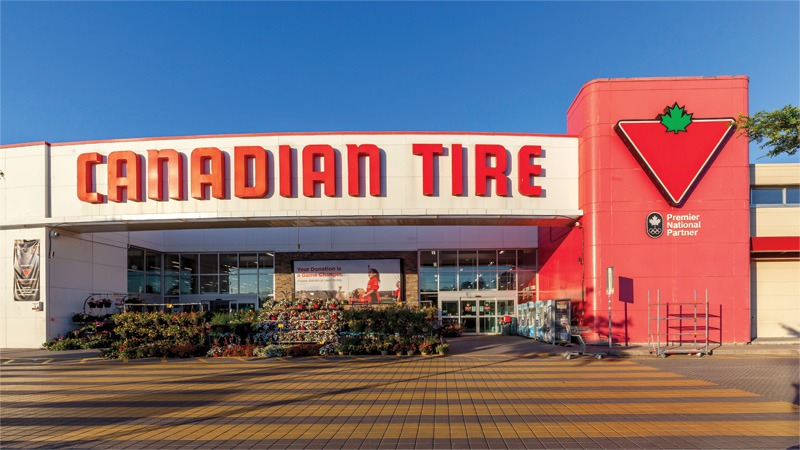
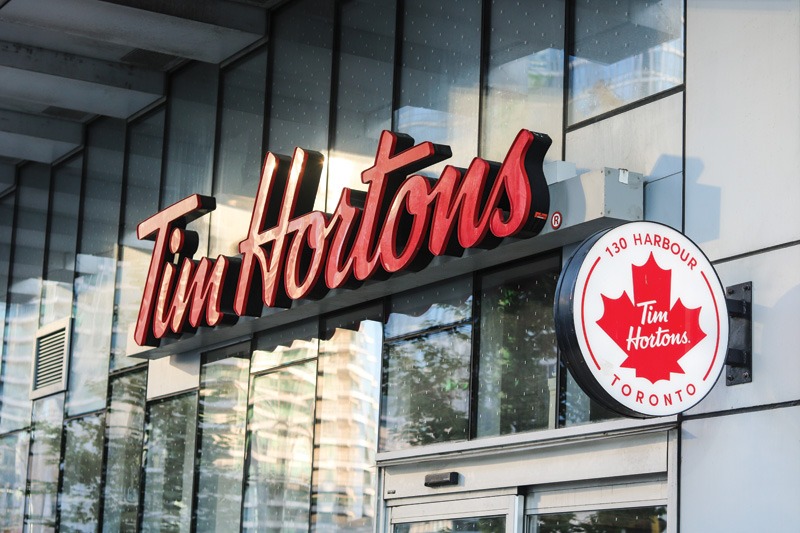
Whether you’re shopping at Canadian Tire, grabbing a coffee at Tim Hortons, browsing the latest products at Apple, or exploring IKEA, you’re surrounded by thermoplastics. They have become one of the most important material families used in the sign and graphics industry, shaping everything from illuminated storefront signage and dimensional logos to wayfinding systems, merchandising displays, kiosks, and featured architectural elements.
After nearly 40 years in this industry, I have developed a habit that my family finds amusing (or annoying…). I can’t walk through a retail space without stopping to figure out how something was built, or drive by a sign installation without critiquing the execution. More than once, I’ve found myself tapping on a display or examining a beautifully fabricated sign, trying to determine whether it was made with acrylic, polycarbonate, polyvinyl chloride (PVC), polyethylene terephthalate glycol (PETG), or acrylonitrile butadiene styrene (ABS). An occupational hazard I am sure you all can relate to!
During my career, I have watched our industry evolve from hand-painted graphics and fluorescent lighting to digital design, automated fabrication, and LED illumination, creating sophisticated branded environments. Yet for years, one of the most significant and consistent baseline materials used in these spaces has been thermoplastics, and for some credible reasons.
More than just a pretty face
Retail spaces have evolved dramatically over the past several decades. Stores are no longer simply places to purchase products. They have become immersive brand experiences designed to engage customers from the moment they walk through the door.
That evolution has transformed the role of signage.
Today’s sign professionals contribute far more than storefront identification. They help create complete branded environments where signage, displays, fixtures, and architectural elements work together to tell a consistent brand story.
Thermoplastics technology has also advanced, converging customer experience expectations with the retailers’ sustainability and reliability goals to create designs that invite and inspire shoppers to spend more time in-store than online.
Acrylic continues to set the standard for illuminated signage because of its outstanding optical clarity, light diffusion, and weatherability. Polycarbonate provides exceptional impact resistance for demanding public environments such as transit systems, drive-thru menu boards, and transportation facilities. Expanded PVC has become a dependable solution for interior wayfinding, promotional graphics, and dimensional signage because it is lightweight, economical, and easy to fabricate. PETG excels in thermoformed retail displays, food service applications, and protective components, while ABS enables fabricators to create durable three-dimensional architectural features, kiosks, and custom fixtures.
Each material offers distinct performance characteristics, allowing designers and fabricators to select the right solution for each application rather than searching for a single material that does everything.
That distinction is important because there is no perfect plastic product, yet there may be the perfect plastic product for the application.
Material selection is about more than price
One of the most valuable lessons I have learned throughout my career is that successful projects rarely begin by asking, “What is the least expensive material?”
They begin by asking, “What is the right material for the application?”
Material selection influences far more than the purchase price of a sheet. It affects fabrication efficiency, machining time, shipping costs, installation, maintenance, product longevity, and, ultimately, the customer’s perception of quality.
The least expensive material option does not always represent the lowest overall cost.

I have seen projects where modest savings in material costs resulted in increased fabrication time, additional service calls, and premature product replacement, frustrating brands and retail owners. Conversely, I have also seen projects where investing slightly more in the appropriate, higher-quality material solution ended up reducing fabrication challenges, improving durability, and extending the life of the finished product for years.
Experienced fabricators understand that every application presents a unique set of requirements.
Will the sign be illuminated?
Will it be installed indoors or outdoors?
Is impact or UV resistance critical?
Does the design require thermoforming?
Will the product be exposed to harsh weather or heavy public use?
What type of material will be used for the graphics application?
Answering these questions determines which thermoplastic will deliver the best overall performance.
The most successful retail programs rarely rely on a single material. Instead, they combine multiple thermoplastics throughout a project, selecting each one according to its strengths. An illuminated storefront may feature a sign using acrylic for optimal light diffusion, polycarbonate in the drive-thru sign where impact resistance is required, PVC is specified for interior graphics, PETG was the material used for custom displays, and ABS for thermoformed architectural components.
Good specifications are not about choosing the least expensive material. They are about creating the greatest long-term value.
Canadian conditions demand Canadian thinking
Canada presents unique challenges for sign professionals. From coastal humidity and prairie winds to intense summer UV exposure and harsh winter freeze-thaw cycles, signage must perform reliably in some of the world’s most demanding climates.
Retailers investing in national branding programs expect customers to experience the same quality and visual identity whether they visit a location in Vancouver, Calgary, Winnipeg, Toronto, Montréal, or Halifax. Achieving that consistency requires careful consideration of both design and material performance long before fabrication begins.
Fortunately, today’s thermoplastics continue to evolve alongside manufacturing technologies. Improved UV-resistant formulations, enhanced impact performance, advanced coatings, and precision fabrication methods have significantly expanded what designers and fabricators can achieve.
What continues to impress me most, however, is not simply the materials themselves. It is the ingenuity of the people who work with them.
I have been privileged to visit fabrication facilities across Canada, each with its own equipment, specialties, and unique approach to manufacturing. Time and again, I have watched talented fabricators transform concepts that seemed impossible on paper into beautifully executed finished products.
Technology continues to evolve, but innovation has never been driven by machinery alone. It is driven by people who understand materials and know how to use them.
Sustainability through better design
Sustainability has become one of the most important conversations in manufacturing, and the sign industry is no exception.
While recycled content often receives the most attention, sustainability begins with thoughtful material selection and intelligent design.
In many cases, the most sustainable sign is simply the one that lasts.
Selecting thermoplastics that deliver long service life reduces maintenance, minimizes replacement, and conserves the resources required to manufacture, transport, and install new products. Increasingly, retailers are also designing signage systems that allow graphics or individual components to be updated without replacing the entire structure.
Manufacturers continue investing in improved production efficiency, using materials with recycled content where appropriate, and planning purchases and processes that reduce waste. Fabricators are maximizing material utilization through precision computer numerical control (CNC) machining and digital nesting software, ensuring that sustainability extends well beyond the finished product.
Sustainability is not achieved through one material alone; it results from thoughtful decisions made throughout design, specification, manufacturing, and installation.
Looking ahead
When I entered the sign industry nearly four decades ago, thermoplastics were often viewed simply as materials used for sign faces and display panels.
Today, they have become the foundation of modern branded environments.
As fabrication technologies continue advancing and retailers increasingly seek to engage with the customer based on in-store experience, the opportunities for thermoplastics will only continue to grow. Designers will imagine new possibilities, manufacturers will develop even more capable materials, and fabricators will continue transforming those ideas into remarkable finished products.
Despite these advances, one thing has remained constant. Great signage has never been about materials alone. It has always been about the people who understand how to use them.
The Canadian sign community is home to some of the most talented professionals in our industry. Their creativity, craftsmanship, and determination to find innovative solutions to even the most complex challenges continue to inspire me every day.
Customers may never stop to think about the materials used in the signs that guide them, and perhaps that is the greatest compliment those materials can receive. When they perform exactly as intended, they quietly support the architecture, reinforce the brand, and allow the customer experience to take centre stage. If there is one lesson I hope readers take away, it is this:
There is no perfect thermoplastic. There is only the right thermoplastic for the application. Understanding that distinction is what transforms materials into solutions and good signage into exceptional branded environments.
Susan Svotelis is general manager, Canada for PLASKOLITE and vice-president of the Sign Association of Canada (SAC). With nearly 40 years of experience in the Canadian sign industry, she has held leadership roles spanning fabrication, project management, business development, and executive sales management. Throughout her career, she has worked closely with sign companies, distributors, designers, and manufacturers across North America, developing a deep appreciation for the innovation, craftsmanship, and collaboration that drive the industry forward.
Sign up for our newsletter
Featuring breaking news from Canada's sign and graphics industry.
Products


Read the Latest Issue

