
What lies ahead for Canadian OOH?
Vistar Media’s 2026 State of Consumer Attention report challenges a common assumption: audiences aren’t tuning out advertising; they’re becoming more selective about what earns their attention. Attention hasn’t disappeared; it’s concentrating around advertising that feels timely, useful, and relevant.
For Canada’s out-of-home (OOH) industry, that distinction is critical. In a medium where impact is measured in seconds, visibility alone is no longer enough. The brands breaking through are those delivering contextually relevant creative in the moments consumers are most receptive. And the opportunity is substantial. OOH reaches roughly 85–90 per cent of Canadians weekly, making it one of the country’s most pervasive media channels.
Creative that earns a second look
Memorability starts with creative, and today, the bar is higher than ever. According to the report, 69 per cent of consumers say humour, emotion, or entertainment drives memorability, while 53 per cent say ads resonate more when they feel personally relevant. In other words, visibility alone is no longer enough; creatives need to justify attention immediately through relevance, emotion, or utility.
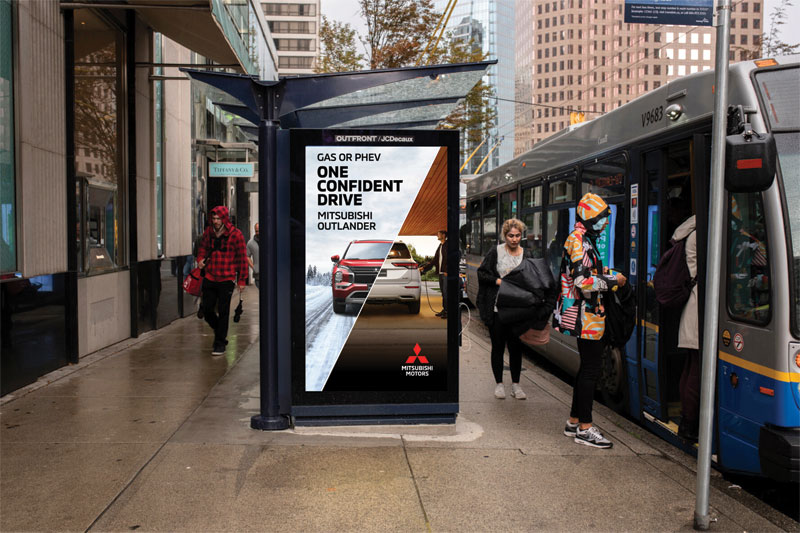
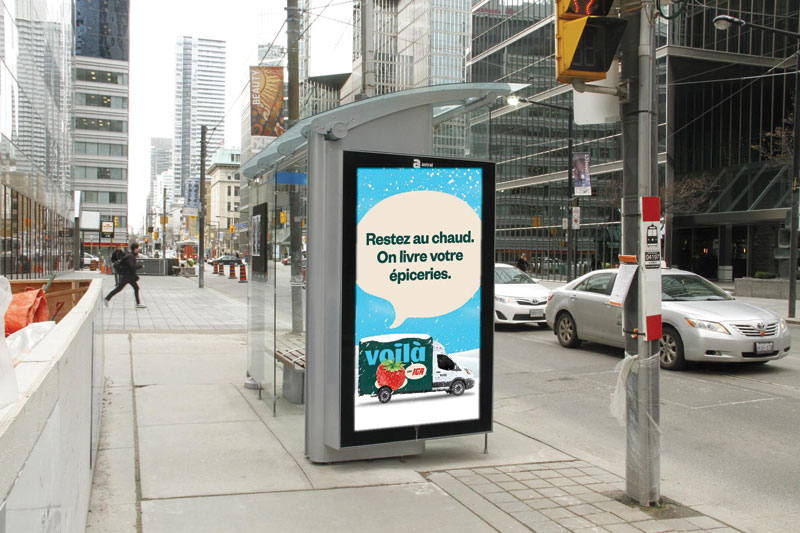
That shift plays directly to the strengths of Canadian OOH. Whether it’s a digital screen or a transit shelter, the most effective campaigns don’t just occupy space, they become part of the environment. When creative feels native to its surroundings and taps into context or cultural moments, it becomes part of the experience rather than
an interruption.
This is one reason OOH continues to stand out in today’s fragmented media landscape. In high-dwell environments, recall is already strong, but contextually relevant creative deepens the impact. A recent Vistar-commissioned survey found that 22 per cent of Canadians notice creative or visually engaging ads most in public spaces, more than on social media (19 per cent), reinforcing OOH’s ability to break through when creative delivers on both form and relevance.
In today’s attention economy, exposure alone doesn’t drive results; meaning does.
AI can optimize, but it can’t replace insight
Artificial Intelligence (AI) is transforming how campaigns are planned and delivered but also how they are perceived. According to the report, 43 per cent of consumers say they trust ads less when they’re labelled as AI-generated, with scepticism rising among younger audiences.
The implication for marketers is clear: AI should strengthen contextual relevance, not replace human insight. Digital OOH (DOOH) is especially well-positioned because it uses contextual signals such as location, timing, and environment to deliver relevant messaging without relying on personal data.
The smartest approach is to use AI behind the scenes: informing planning, optimizing delivery, and refining audience insights, while ensuring the creative itself still feels human. Ultimately, audiences don’t connect with algorithms, they connect with ideas.
Authenticity over star power
The report also signals a shift in what drives trust, with 58 per cent of consumers saying authenticity matters more than who delivers the message, while just four per cent prioritize celebrity alone.
That shift is especially important in Canada, where regional identity and cultural nuance heavily influence how advertising is received. Messaging that reflects a local mindset or shared experience will often outperform one built around scale or star power. That sense of familiarity and relevance also drives trust. A recent Vistar survey found that 50 per cent of Canadians trust OOH advertising, nearly four times more than social or online ads (12 per cent).
In practice, this shift toward trust and authenticity changes what effective creative looks like. Work grounded in humour (47 per cent), nostalgia (26 per cent), and local cultural context has a clear advantage. The most effective OOH creative reflects the mindset of the communities it appears within.
Context is OOH’s competitive advantage
While 40 per cent of consumers cite creative quality as the top driver of recall, factors such as unexpected placement (28 per cent) and contextual relevance (24 per cent) play a critical supporting role.
Across Canada, digital networks are expanding rapidly. These environments deliver more than scale; they create high-attention moments tied to intent, proximity, and real-world context.
The impact is measurable. According to the same survey, 30 per cent of Canadian consumers are more likely to act after seeing DOOH advertising before making a purchase, while 39 per cent report taking action after seeing a billboard or outdoor ad.
As retail media networks expand, OOH is becoming increasingly valuable not just for awareness, but for influencing decisions closer to the point of purchase.

The future of OOH is intentional
In today’s media environment, attention has become a value exchange. Consumers reward brands that respect their environment, reflect their mindset, and contribute something meaningful in the moment.
DOOH uses real-world cues like location and timing to deliver messaging that feels relevant in context. Its future isn’t about chasing consumers across devices; it’s about showing up meaningfully on the moments that matter most.
For Canadian marketers, the path forward is clear: elevate creative, invest in smarter contextual execution, and treat every placement as part of a connected, audience-first ecosystem. OOH’s future won’t be defined by format; it will be defined by impact. Attention isn’t disappearing; it’s becoming harder to earn and more valuable when captured.
In OOH advertising, the brands breaking through are those delivering contextually relevant creative in the moments consumers are most receptive.
Scott Mitchell is managing director, Canada at Vistar Media.

Sign up for our newsletter
Featuring breaking news from Canada's sign and graphics industry.
Products


Read the Latest Issue
