
Why structured education is the backbone of compliance
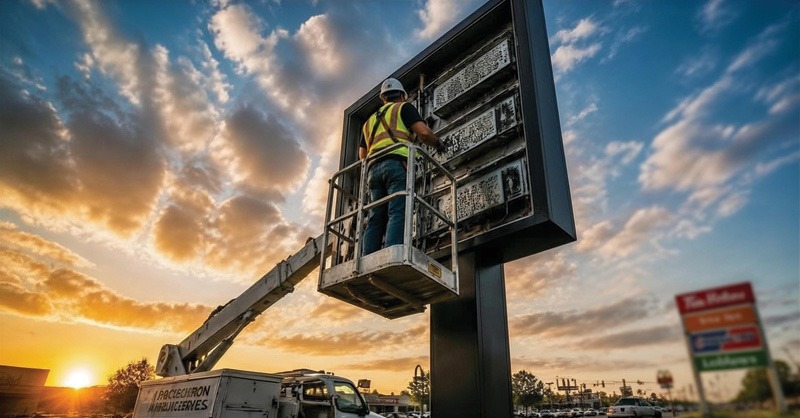
In Alberta in the late 1980s and early 1990s, the sign industry was going through difficult times. The industry was changing, neon signage was seeing renewed use, and sign fires, property damage, worker injuries, and unsafe practices were putting sign companies in the spotlight for the wrong reasons.
Occupational health and safety officials, electrical inspection authorities, and local fire agencies were looking closely at the industry and asking hard questions. Were the people installing and servicing electrical signs properly trained? Did they understand the hazards involved in the work they were doing? Were sign companies giving their workers the knowledge needed to do the work safely?
Some were even asking whether sign installation and service should continue to be performed by employees of sign companies, or whether more of that work should be moved to local electrical contractors.
Then, in the spring of 1992, the conversation changed.
A sign worker with more than two decades of experience was servicing a freestanding pylon sign. During the repair, he became part of the electrical circuit energizing the lighting components. He was electrocuted and died as a result.
The industry had seen injuries before. Sprains, strains, falls, broken bones, and soft-tissue injuries were not uncommon in an era when workplace safety expectations were different than they are today. But a fatality forced a harder question: Were workers being properly prepared for the electrical hazards they faced every day?
That event pushed the Alberta sign industry toward change. The Alberta Sign Association, its members, government representatives, educators, people connected to electrical training and apprenticeship, and experienced sign installers from across the province began working together on a program that could teach sign service and installation personnel the electrical hazards, code requirements, and safe work practices they needed to understand.
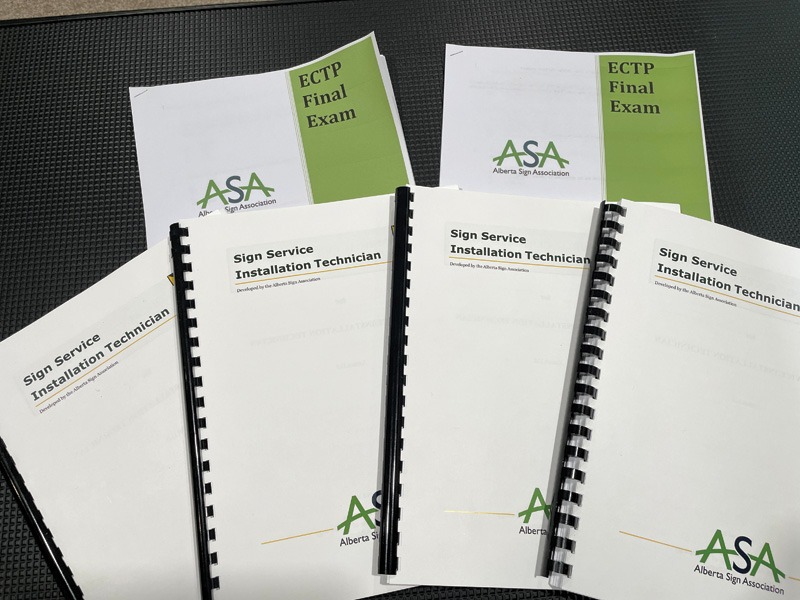
What came from that work was the Sign Service and Installation Technician certification (SSIT). Today, many in the industry also know this training through the Electrical Certificate Training Program (ECTP).
The purpose was not simply to create another certificate, but rather to make sure sign workers understood that the work they perform every day has rules and regulations attached to it, and that everyone in the industry has a responsibility to understand, follow, and obey those rules.
Why education matters
In the first article in this series, we looked at the relationship between the Canadian Electrical Code Part I and the applicable Part II product standard for electric signs. Part I governs installation and field work. Part II product standards govern how electrical equipment is constructed and approved. Certification bodies, plant inspections, and approval labels are important, but they are part of a larger compliance system.
Education is how that system becomes practical.
A worker does not become safer simply because a rule exists in a book. A company does not become compliant simply because a certification body visits the plant. The knowledge has to reach the people designing, building, installing, and servicing the sign. It has to reach the supervisor assigning the work, the project manager planning the job, and the owner responsible for the company’s practices.
For many years, much of the sign industry relied on informal training. Senior workers taught junior workers. People learned in the shop, in the bucket, on the truck, or under the sign. That kind of mentorship still has value. Experienced workers often carry practical knowledge that cannot be learned from a book alone.
The problem is that informal training can also pass along unsafe habits. If a worker learned to find a breaker by shorting it against a cabinet, that practice might be repeated. If someone was taught to change electrical components from an aluminum ladder without properly controlling the hazard, that could become normal. If grounding and bonding were explained incorrectly, the misunderstanding could move from one worker to the next.
Nobody has to intend to be unsafe for unsafe work to become part of a company’s culture. When companies do not understand the rules themselves, they can unintentionally place their service and installation workers at risk.
That is why structured education matters.
What training should teach
Good training starts with a simple point: electrical sign work is regulated work. It may look familiar to people who do it every day, but familiarity does not remove the rules. Workers need to know that the tasks they perform are connected to the Canadian Electrical Code, occupational health and safety requirements, provincial and territorial rules, local inspection expectations, and the authority having jurisdiction.
From there, training has to become practical. Sign installation and service involve more electrical knowledge than many people outside the industry realize. Workers may be installing illuminated signs, replacing power supplies, troubleshooting LED systems, working around neon components, confirming approval markings, inspecting existing conditions, co-ordinating permits, or asking whether a sign can be safely energized.
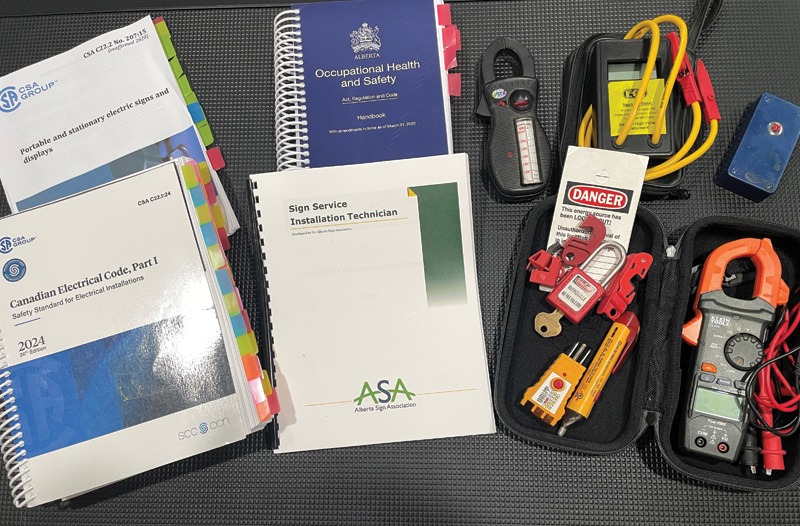
A good training program teaches workers to ask better questions before work begins.
Is the sign approved for use?
Is the approval marking acceptable in this jurisdiction?
Is an electrical permit required?
Is the disconnecting means correct?
Is the cabinet bonded?
Are conductors supported and protected?
Does this work fall within the worker’s scope?
Should an electrical contractor or the authority having jurisdiction be consulted before proceeding?
Those are not just classroom questions. They are the questions that prevent workers from guessing in the field.
Training should also teach workers how to use the Code, not just hear about it. Section 34, Signs and Outline Lighting, is important, but it does not stand alone. Sign installers and service technicians need to know how to find the sign-related rules, but they also need to understand that other parts of the Code may still apply. Depending on the work, that may include wiring methods, conductor support, cable bend radius, bonding, grounding, overcurrent protection, disconnecting means, markings, and general installation requirements.
Grounding and bonding are good examples. These terms are sometimes used casually in the field, as though they mean the same thing. They do not. Understanding the difference is central to safe electrical work. The same is true for approved markings. Workers need to know what suitable evidence of approval looks like and what steps to take when that evidence is missing, unclear, or not acceptable to the authority having jurisdiction.
Training also has to address occupational health and safety. Electrical hazards do not exist by themselves. Sign workers deal with ladders, lifts, weather, traffic, heights, lifting, access, old equipment, customer sites, and changing field conditions. A worker on a service call may be making decisions quickly and often alone. The better the worker understands the full risk environment, the better those decisions will be.
Training is available, but it has to be used
One of the lessons from Alberta is that available training only helps when companies and workers actually take it.
The SSIT and ECTP training grew out of a serious industry need. At the time of writing, the program has been taught in Alberta, Saskatchewan, Manitoba, and the Atlantic provinces. In 2006, the program was given to the Sign Association of Canada with the hope that it could be moved to a national level. That national pathway has not materialized, but the need behind the program has not gone away.
The long-term hope for many has been that sign work could become more formally recognized, with a clearer worker certification path for people who install and service electrical signs. Some in the industry have raised concerns that trade recognition or formal worker certification could affect wage expectations and business models. Those concerns may be part of the conversation, but they should not stop the industry from improving training, safety, and professional recognition.
The goal is not to make it harder to operate a sign company. The goal is to make sure the people being sent into the field have the knowledge needed to come home safely and do the work correctly.
Since 1992, the industry has continued to see serious incidents. Alberta also saw another sign worker death in 2021. That is a difficult reminder that the existence of training is not enough. If workers have not taken the training, or if companies have not made education part of their culture, the same kinds of risks can remain.
Training should not be treated as something optional or only something to think about after an incident. It should be part of how responsible sign companies prepare people for the work they are expected to perform.
Technology changes, but hazards remain
Today’s sign industry is heavily focused on light-emitting diode (LED) systems, electronic power supplies, digital displays, and integrated controls. These changes have improved many parts of the industry, but they have also created a false sense of simplicity.
Low voltage does not mean no risk. A finished electrical sign may still connect to the electrical supply. It may still require proper approval, correct installation, suitable markings, permits, bonding, disconnecting means, and inspection. A worker who only sees the low-voltage side of a system may miss the larger compliance picture.
Older technologies have not disappeared either. Neon signs still exist. Legacy signs still require service. Workers may still encounter transformers, secondary wiring, three-phase power, variable power, series circuits, parallel circuits, voltage, current, and equipment that was installed under earlier practices.
Training should prepare workers for the range of equipment they may see in the field, not just the newest products being sold today. The goal is not to overwhelm workers. The goal is to give them enough understanding to work safely, recognize limits, and know when more qualified help is required.
A national issue with regional differences
The Alberta experience is important because it shows how training can develop when industry, government, educators, and safety authorities recognize a shared problem. But Alberta is not the whole national story.
Across Canada, there is no single pathway that applies the same way in every province or territory. Some jurisdictions have specific licenses, certificates, or limited authorization pathways. Some require exams or testing. Some rely on broader electrical licensing structures.
Some requirements depend heavily on the authority having jurisdiction, local inspection practice, permits, or employer responsibility.
That variation can make the issue feel complicated, but it should not weaken the main message. Every region needs competent people doing sign work. Every company should be asking whether its workers are trained for the tasks they are performing. Every association should be asking whether the industry in its area is protecting workers and strengthening public confidence.
Ontario is one example of a province where the sign industry is actively looking at training and qualification pathways. The Ontario Sign Association has identified challenges its members face when field installation and service work involving primary voltage must be managed within the province’s existing electrical licensing framework. In response, the association is working toward a more formal training and certification path for Ontario sign companies, with a goal of standardizing sign-technician training and pursuing recognition with the appropriate provincial bodies.
That work is encouraging, and it reflects a broader point for the national industry: each region should be looking at its own requirements, its own gaps, and its own opportunities to improve worker training and professional recognition.
The larger lesson is not that one province has solved the issue and others have not. The lesson is that every province and region should look inward and ask what more can be done to train workers, protect people, and secure the professionalism of the sign industry.
Training is a company’s responsibility
Training also connects to the manufacturing and approval side of the industry. A company may be part of a certification program or may work with a recognized approval body, but that does not replace the need for internal education. A plant audit or written notice can identify a compliance issue, but it cannot build a company culture by itself.
If the shop does not understand why a requirement exists, it may keep repeating the same mistake. If supervisors do not understand the rules, they may give poor direction. If installers do not understand what approval markings mean, they may install equipment that should have been questioned. If project managers do not understand permit or inspection requirements, they may promise timelines that are not realistic.
Competency has to be built into the company, not added at the end.
That means education should not be limited to installers alone. Owners, managers, supervisors, project managers, designers, estimators, assemblers, installers, and service technicians all affect compliance. The person pricing or planning a project may create problems for the installer if electrical requirements are not considered early enough. The person building a sign may create field problems if product approval requirements are not understood. The person installing a sign may create inspection or safety problems if field requirements are treated as an afterthought.
Training creates a shared language across the company.

Training should also be refreshed. Codes change. Standards are revised. Technologies evolve. Workers move between companies. New employees enter the industry. A company that trained people once and then stops paying attention will eventually fall behind. Good training is not a one-time event; it is part of how a professional company operates.
Raising the standard
The sign industry is full of practical, capable people. That should remain one of its strengths. But practical knowledge must be supported by current education. The work is too important, and the consequences of poor electrical practices are too serious, to rely only on memory, habit, or word of mouth.
Training does not need to remove the sign industry’s practical character. It should strengthen it. A trained installer is still practical. A trained service technician is still resourceful. A trained supervisor still knows how to get work done. The difference is that their decisions are supported by code knowledge, safety awareness, and a clearer understanding of responsibility.
The goal is not to turn every sign worker into an electrician. The goal is to make sure workers understand the electrical hazards, rules, approval requirements, and limits that apply to their work. It is also to make sure companies understand their obligation to put competent people in the field.
The 1992 Alberta fatality remains an important reminder that experience alone is not enough. The 2021 fatality reminds us that the lesson still matters. A worker can have many years in the industry and still be placed at risk if the company, the industry, and the training system around that worker are not strong enough.
Education is how the Code becomes usable. Training is how safety moves from a policy into daily practice. It affects the shop floor, the service truck, the job site, the inspection process, and the customer’s confidence in the finished sign.
| KEY TAKEAWAY |
| Workers need to know that the tasks they perform are connected to the Canadian Electrical Code, occupational health and safety requirements, provincial and territorial rules, local inspection expectations, and the authority having jurisdiction—and from there, training has to become practical. |
This article is Part 2 in a three-part series aimed at helping sign companies better understand the rules and standards that affect their work. The next, and final, article in this series will look at the remaining gaps and practical steps the sign industry can take as it continues to strengthen compliance, training, and professional recognition across Canada.
Dale Maron is a journeyman Red Seal electrician and holds a Certified Master Electrician designation in Alberta. He also holds a Safety Codes Officer designation as an electrical inspector in the province. He is vice-chair of the Section 34 Subcommittee, a member of the CSA 22.2 No. 207 Standards Committee, and an Electrical Certificate Training Program (ECTP) instructor. Devin Froese is president of Seventy-Seven Signs, a member of the Section 34 Subcommittee, and a standing member of the Saskatchewan Sign Association.

Sign up for our newsletter
Featuring breaking news from Canada's sign and graphics industry.
Products




Read the Latest Issue
