The story behind UBC Okanagan’s Indigenous language audio signs
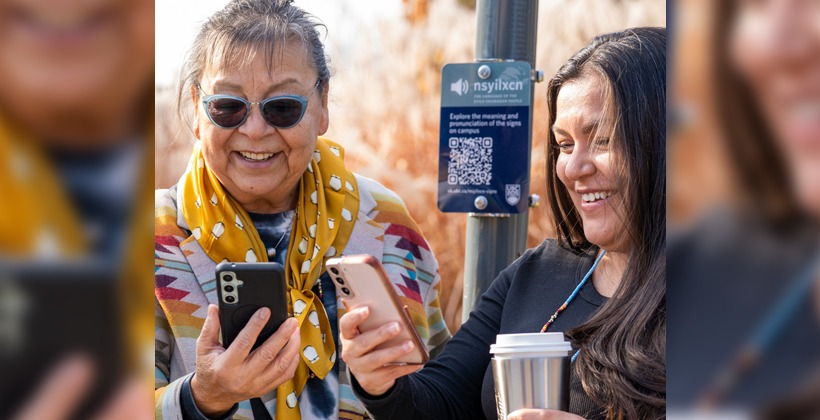
In an effort to support the revitalization of the endangered Nsyilxcn language, the University of British Columbia’s Okanagan campus recently upgraded its street signs to include QR codes that link to audio recordings, allowing visitors and the campus community to hear the language spoken.
According to Sylix.org, Nsyilxcn is the language spoken by the Syilx Okanagan peoples and is part of the Salish language family. There was a severe loss of native language retention in indigenous Syilx Okanagan peoples during colonization, when Indian Residential Schools were introduced, and Indigenous Peoples were severely punished for speaking their own languages and forced to speak English.
A long time in the making
The Nsyilxcn street signs in UBC’s Okanagan campus were first added to the existing campus street signs in March 2010. In 2019, as part of the university’s commitments to Truth and Reconciliation, it pledged to “develop and implement activities that support the revitalization of language fluency, including through initiatives such as …[s]ignage and wayfinding on campus which represents Okanagan language and culture.”
The campus began an update of the street signs in 2020, making them more informative for the campus community and to foster understanding and learning of the Nsyilxcn language. According to the university’s website, the signs were created in partnership with the En’owkin Centre and the Okanagan Nation Alliance (ONA) and were installed in early 2022.
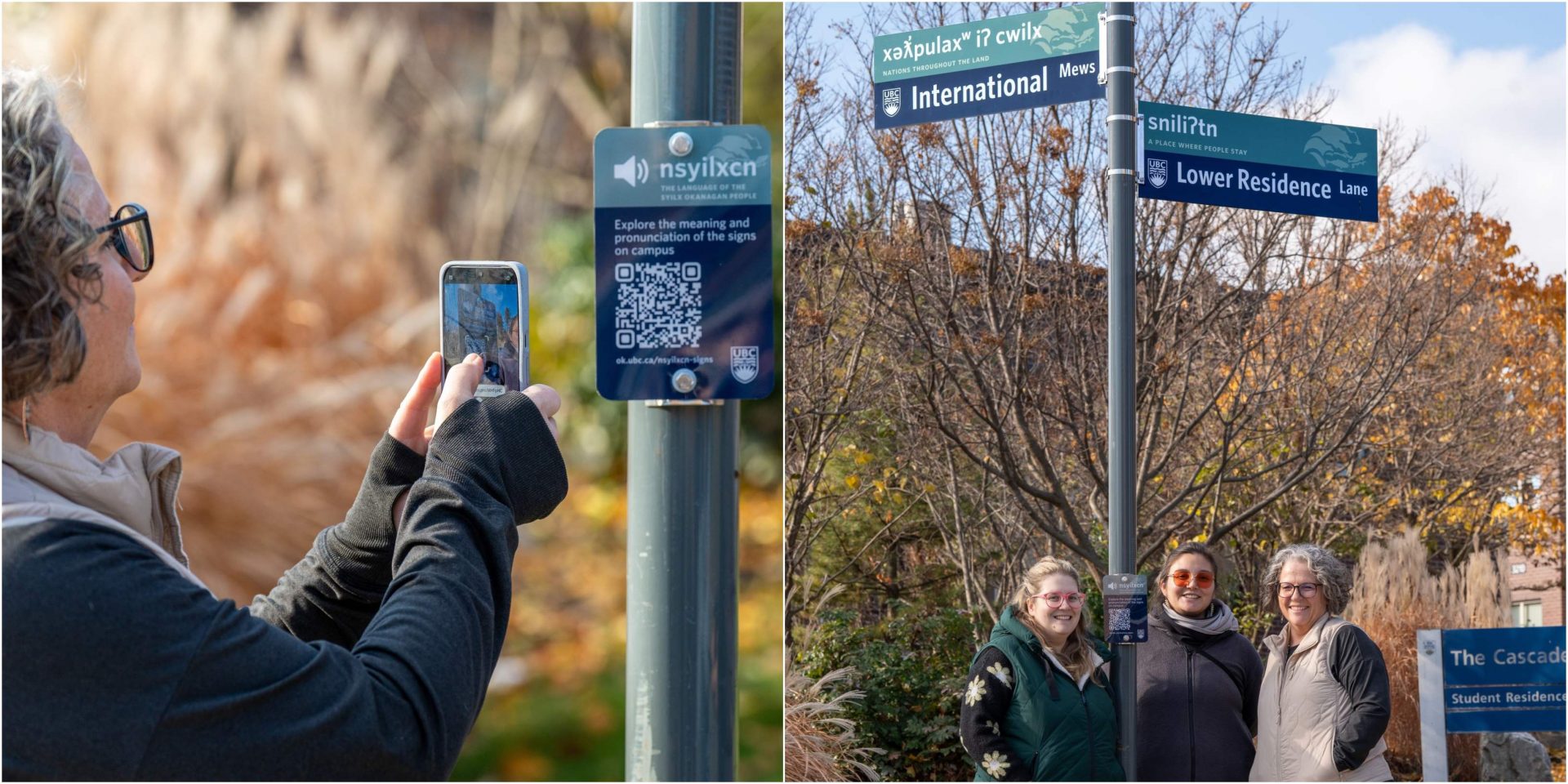
The QR codes that are now part of the signs lead to audio recordings created by the second cohort of the Bachelor of Nsyilxcn Language Fluency degree. The university encouraged the campus community to scan the codes and engage with the Nsyilxcn language.
The Nsyilxcn translations are interpretations of the meaning or concepts communicated by the English street names. For example, “np̕aƛ̕mqsts iʔ scmaʔmayaʔs” was chosen as the translation for Alumni Avenue as it means “graduated with higher learning”. The translations were developed by the En’owkin Centre’s language keepers and speakers.
Sign up for our newsletter
Featuring breaking news from Canada's sign and graphics industry.
Read the Latest Issue
