
The Greek city behind 2025’s ‘Best Mural of the World’
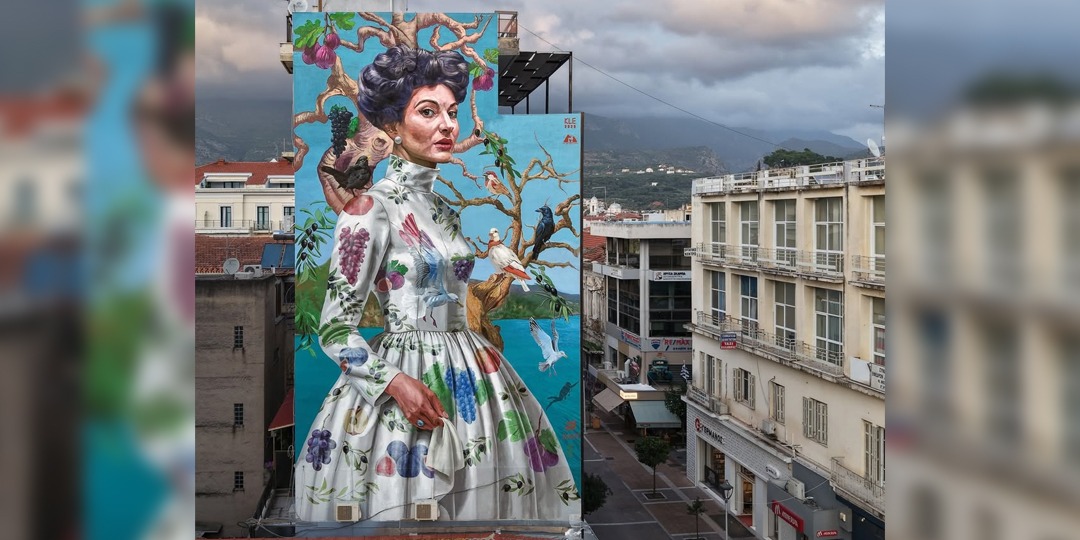
A large-scale mural in the southern Greek city of Kalamata has been named 2025’s “Best Mural of the World” by Street Art Cities, drawing international attention to a project that links cultural heritage with local agriculture and climate goals.
The artwork, painted on the side of a central building, depicts opera singer Maria Callas as an allegorical figure representing the city. According to the Associated Press (AP), the mural incorporates olives, figs, and grapes—agricultural products long associated with the region—into the singer’s dress and surrounding imagery.
The story of Kalamata
Kalamata, located about 240 kilometres southwest of Athens, is known for its olive production. As AP reports, city officials commissioned the mural as part of a broader effort to make sustainability and economic development more visible to residents. Kalamata is among a limited number of Greek municipalities aiming to achieve climate neutrality by 2030.
Deputy Mayor for Strategic Planning and Climate Neutrality Vassilis Papaefstathiou told AP the goal was to present sustainable development in a form that resonates locally. “We wanted it to reflect a very clear and distinct message of what sustainable development means for a regional city such as Kalamata,” he told AP.
The choice of Callas carries local significance. Though born in New York to Greek immigrant parents, her father came from a village south of Kalamata. AP notes that the city’s music school alumni association bears her name, and its cultural centre hosts an exhibition featuring material from her personal archive.
Artist Kleomenis Kostopoulos said the mural is titled “Kalamata,” not “Maria Callas,” underscoring its civic focus. “I hope this new mural will become a landmark, making people look up. An opportunity for more art on the streets of Kalamata, but also for me, perhaps, as a new beginning in a truly welcoming city,” the artist said on Instagram. According to AP, the composition includes tree branches, native birds, and fruit-bearing elements intended to reference the land and its productivity.
Southern Greece has faced repeated heatwaves, droughts, and wildfires in recent years, affecting olive groves and other crops central to the regional economy. Municipal leaders view the project as part of a broader strategy to strengthen local identity while advancing environmental objectives, AP reports.
Read the original report by Lefteris Pitarakis and Theodora Tongas for AP here.

Sign up for our newsletter
Featuring breaking news from Canada's sign and graphics industry.
Popular Articles
-
1
-
2
-
3
-
4
-
5
Read the Latest Issue
