
Meet the Maker | Guy Langevin: ‘There’s a “yes” in your client’s vocabulary—find it’
Welcome back to Meet the Makers, a series that takes a playful, engaging approach to showcasing the personalities and expertise of sign pros, all while staying rooted in the signage industry.
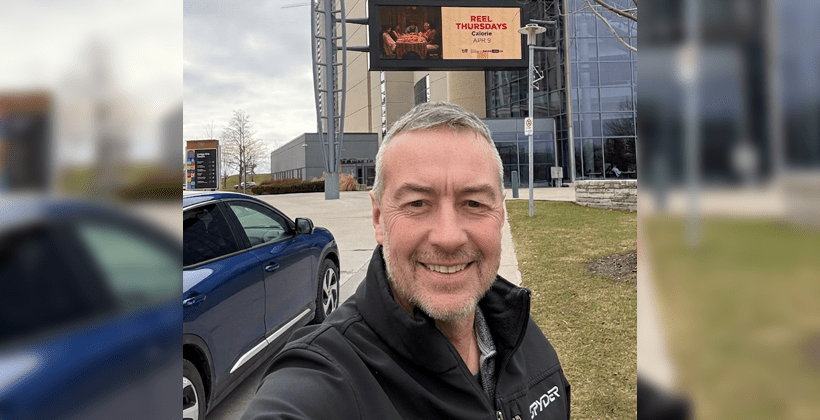
This week, we’re heading to Sarnia, Ont., to meet Guy Langevin, CET, president of AG Sign and Print (Askguy.ca) and President of the Ontario Sign Association (OSA). An Underwriters Laboratories of Canada (ULC)-certified manufacturer and 3M Preferred installer based in Sarnia, Langevin is a vocal advocate for elevating technical standards and securing Red Seal trade status for the Canadian sign industry.
His journey began in the trenches of small and medium-sized shops in Ottawa, eventually leading him to a major firm in Montreal, Que. However, he knew that to build the projects he envisioned, he needed a deeper technical foundation. He went back to college to earn his Certificate in Engineering Technology (CET)—a move that fundamentally changed how he looks at a sign cabinet.
When he relocated to Southwestern Ontario, he found a community that anchored him. After 30 years of evolution, his company has recently rebranded as AG Sign and Print. Now ULC-certified, with a team featuring 3M Preferred and Architectural Certified installers, the company is setting a deliberate course for high-stakes civil and institutional projects.
Here are his responses to our five offbeat questions:
What’s your sign superpower?
I am fascinated by fabrication. To me, signs are more than marketing vehicles; they are architectural infrastructure, street furniture, and community icons. Whether I am calculating wind loads or electrical draws, I approach every project with a “Forms Follow Function” mindset. My background allows me to speak the language of architects and engineers, ensuring we aren’t just “hanging a sign,” but are fully integrated into the civil engineering of the site.
My superpower? No limitations. It is taking on the “impossible” projects. We specialize in institutional rollouts—school boards, financial institutions, and hospitals—where security, bonding, and technical precision are non-negotiable.
A prime example is our current project for Progressive Auto Group. This is the first of its kind for Lambton County and represents one of the largest privately owned digital boards ever installed at a commercial dealership. It is a landmark project that perfectly illustrates our capability for massive, high-tech civil signage.
What’s the most challenging project you’ve worked on?
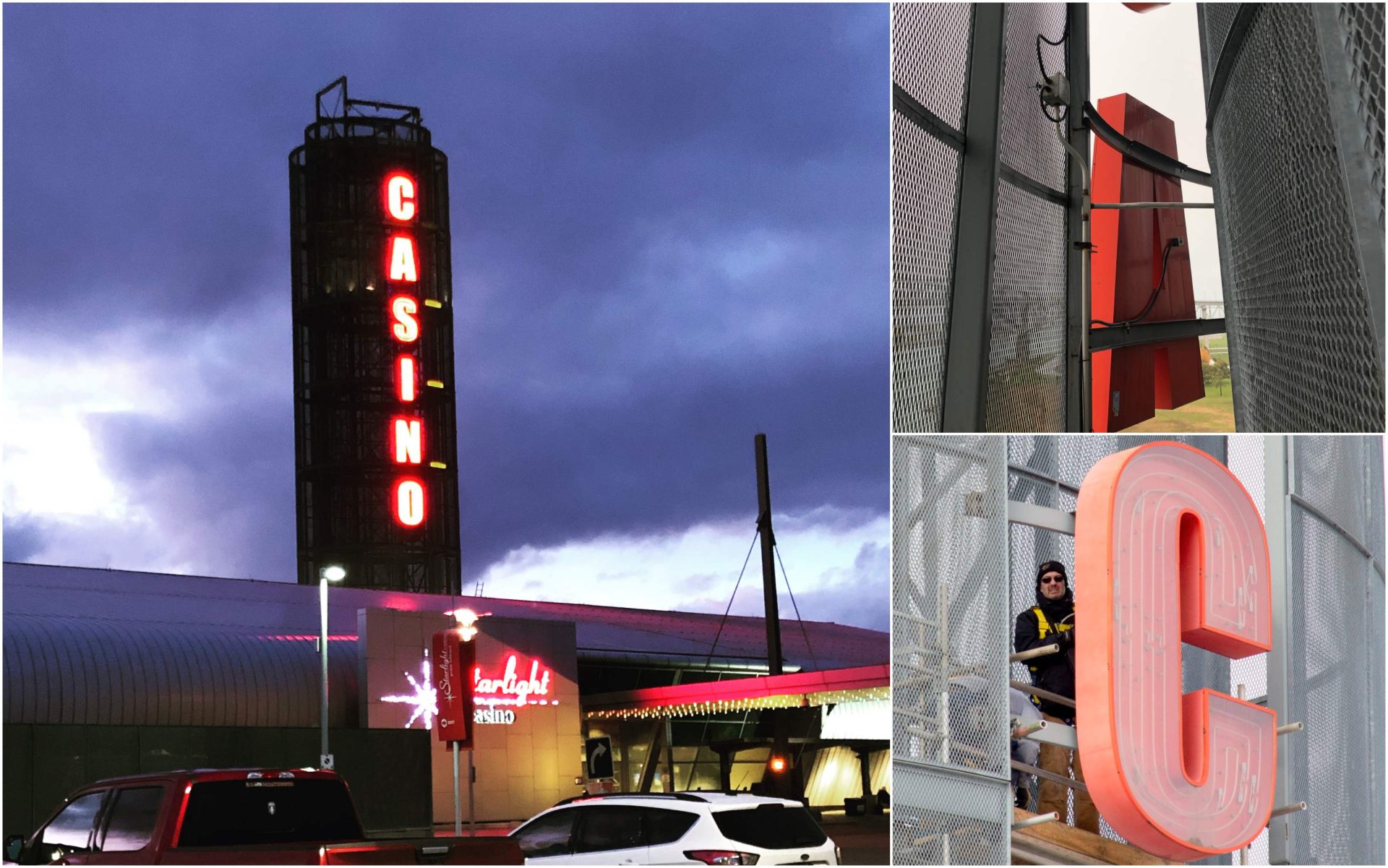
The “Raccoon Residency” is the ultimate only-in-signage moment. We were contracted to maintain the neon letters on a Casino Tower in Point Edward, Ont. When the sign shorted out, we were called for an emergency repair. Reaching the summit, we discovered the “tenants” of the tower had caused the electrical short. Sadly, the mother raccoon had passed, but her litter was very much alive and looking for help. As we worked on the high-voltage neon, the kits climbed into our tool buckets to find refuge. We ended up completing the repair and ensuring the litter found a proper new home. It’s a reminder that even at 100 feet in the air, you must account for every type of “on-site obstruction”.
What’s a favourite sign or sign system you’ve created?
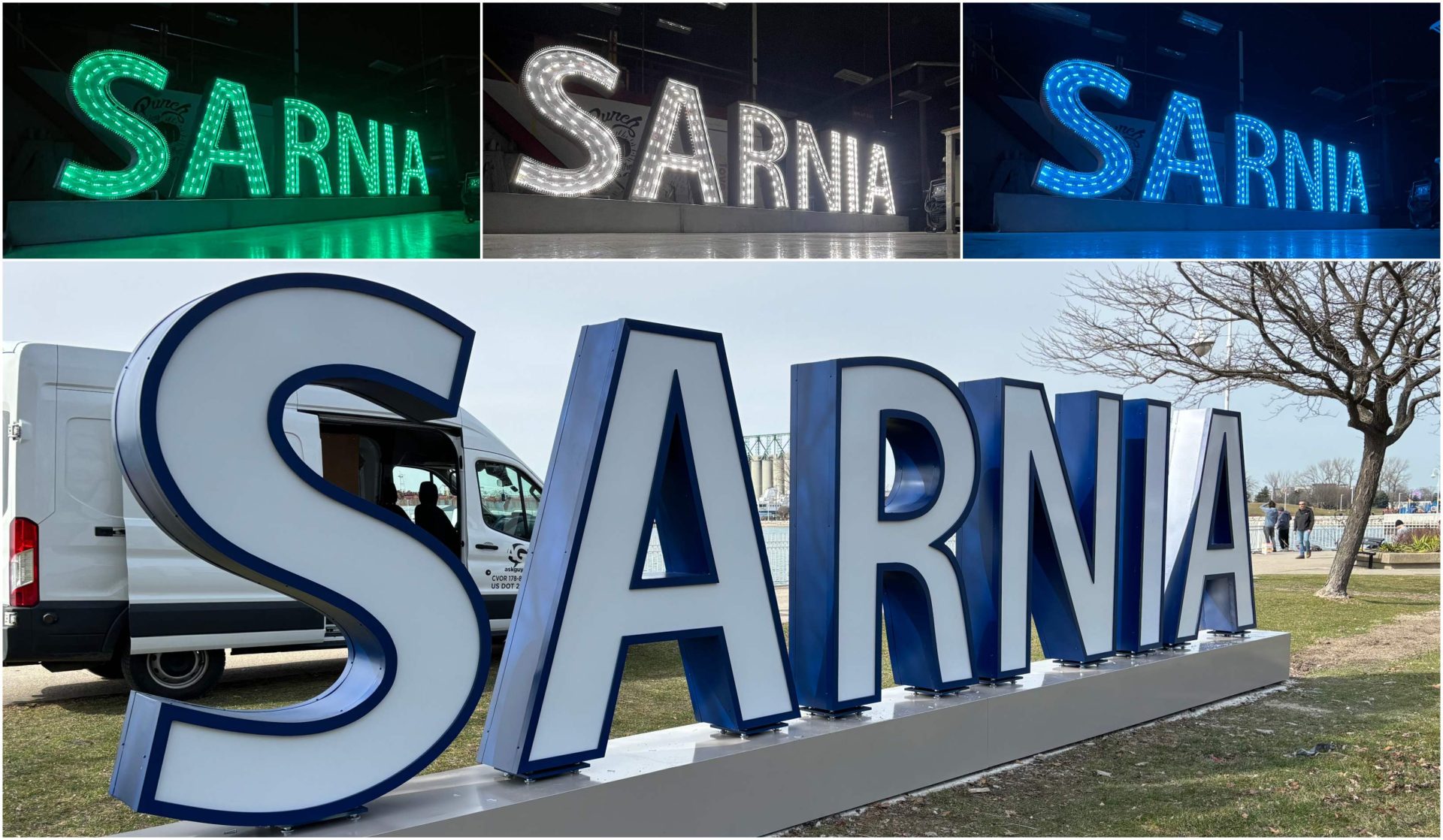
A career highlight was the fabrication of the iconic SARNIA waterfront letters. I want to pay homage to Spectra Advertising for issuing AG Sign and Print the fabrication contract for this project. These letters are strategically positioned in Centennial Park, standing directly across the river from Michigan. They serve as a daily reminder to our American neighbours that we, as Canadians, are unique, loyal, and fiercely proud of our culture, heritage, and dominion. It is the quintessential example of signage as a community icon, a piece of street furniture that defines our national identity on the border.
Further, another favourite moment in my career isn’t about a sign but about the industry itself. As president of the OSA, I have worked to create lasting, structural change. We have recently partnered with the Canadian Federation of Independent Business (CFIB) to provide our members with critical value, including HR tools, legal access, and a unified voice at both provincial and federal government levels. Most importantly, we are currently on the journey to having the sign industry recognized as a formal Red Seal trade in Ontario, professionalizing our craft for the next generation.
If signage could talk, what’s the funniest thing a sign has ever ‘said’ to you?
I once saw a church marquee that read: “Honk if you love Jesus. Text while driving if you want to meet him.” It was a perfect, witty reminder of the power of a few simple letters to stop people in their tracks.

What’s the one piece of signage advice you wish everyone knew?
My advice? Be Curious. Approach every project from all angles. A client looks to a sign professional for guidance to ensure a project is completed with individuality. To those clients who seem discouraged, remember: there is a “Yes” in their vocabulary—you just must be the one to find it.
I will also add that my commitment to excellence is a family trait. My oldest daughter, Jess, is a medical professional practicing family medicine at the Mayo Clinic in Rochester, Minnesota. My youngest daughter, Sam, has followed in my footsteps in the graphics industry, successfully running a production at a boutique graphic company.
***
Here’s to celebrating the industry’s creative minds! See you next time.
Sign up for our newsletter
Featuring breaking news from Canada's sign and graphics industry.
Popular Articles
-
1
-
2
-
3
-
4
-
5
Read the Latest Issue

