
Calgary: The push for accessible transit starts at the bus stop
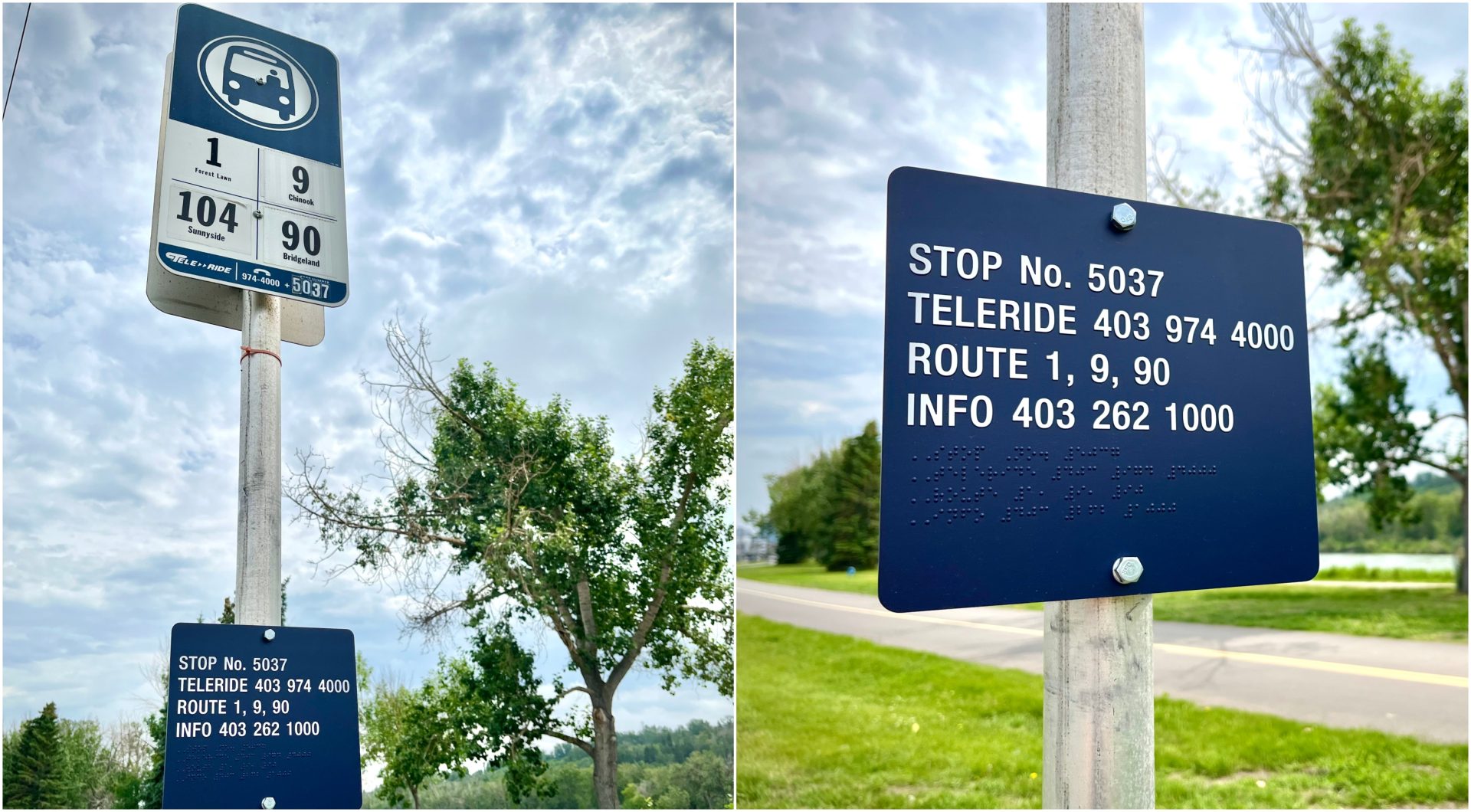
Calgary Transit has installed 89 tactile, high-contrast signs along Route 90, giving riders who are blind, deafblind, or have low vision access to key bus-stop information through raised text and braille.
The pilot route runs between Bridgeland and the University of Calgary. Each sign includes information such as the stop ID, route details, and Calgary Transit’s TeleRide phone number, 403-974-4000.
The transit agency worked with the Canadian National Institute for the Blind (officially operating as the CNIB Foundation) on the design of the signs. More feedback from CNIB and the public will be used to assess whether similar signs should be installed at bus stops across Calgary. “We want all our riders to have the ability to use transit independently and confidently as they travel around Calgary,” said Sharon Fleming, director of Calgary Transit.
CNIB advocacy lead, Taylor Bauer, said accessible transit is also about safety, independence, and confidence.
“These tactile, high-contrast bus stop signs along Route 90 are an encouraging step toward ensuring people who are blind, deafblind, or have low vision can get where they need to go, when they need to go,” Bauer said.
All aboard
The pilot is part of broader accessibility work underway around Calgary’s CTrain stations.
At Sunnyside Station, Calgary Transit made several pedestrian-crossing upgrades in 2025, including automatic gate arms, emergency swing gates, and wider crossing surfaces. The improvements also include tactile surfaces, wheelchair ramps, and cane-detectable features.
LED indicators and upgraded lighting improve visibility, while modern control systems improve reliability. Calgary Transit also expanded CCTV coverage in the area to support safety.
Calgary Transit is collecting public feedback on the Route 90 tactile-sign pilot through a questionnaire. The feedback will help Calgary Transit decide whether to expand the signs to other bus routes.

Sign up for our newsletter
Featuring breaking news from Canada's sign and graphics industry.
Popular Articles
-
1
-
2
-
3
-
4
-
5
Read the Latest Issue

