
The foundation of a quality sign
Puzzle image © almagami/Courtesy Bigstockphoto.com; Background image generated by Gemini
How are some sign companies still getting away with building bad signs?
That question has been asked in professional sign shops for as long as electric signs have been installed over doorways and along roadways. Reputable companies invest in training, certification, proper components, permits, and inspections. They then find themselves competing against signs that may cost less because some or all of those requirements have been avoided.
For this discussion, a bad sign is not one with poor design, weak illumination, or an unattractive finish. A bad sign is an electrical sign that has not been built, wired, marked, permitted, installed, or inspected to the applicable standards.
The customer may never see the difference. The sign may illuminate and appear to work. But the certification marking may be missing. The required disconnecting means may not have been installed. A permit may not have been obtained. Components may have been used outside the conditions of their approval.
A functioning sign is not necessarily a compliant sign.
Whether the customer is a national corporation or a small independent business, the electrical safety standard should be the same.
Why does non-compliance continue?
There is no single answer.
Many customers do not know what electrical compliance looks like. They may compare two quotations and see only the final price. One company has included approved construction, certification, proper components, permits, disconnecting means, and inspection. Another has not. Unless the customer understands the difference, both quotations may appear to describe the same product.
Some sign shops may also believe that certification is too complicated for a smaller company. They may assume the process is beyond their reach or that it is easier to complete the work without approval and hope nobody notices.
The path to compliance does require time, patience, education, and a working relationship with a certification body. That does not make it an unreasonable effort.
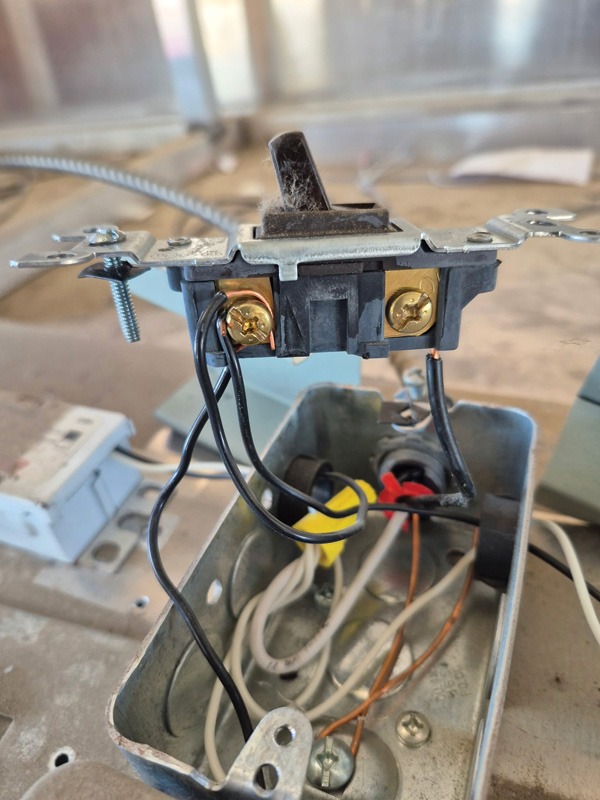
Certification, inspection, and proper construction are part of the cost of doing business when manufacturing electrical signs. They are not optional features to be removed from the quotation.
Companies that are not yet operating under an ongoing manufacturer certification program can begin by contacting a recognized certification or field evaluation body. For certain individual or custom signs, field evaluation under CSA SPE-1000 may provide an approval pathway while the company learns the applicable requirements and considers the longer-term path toward manufacturer certification.
The important thing is to begin.
Certification bodies work with manufacturers to explain construction requirements, approved components, markings, testing, documentation, and production controls. The process is intended to bring companies into compliance, not to keep them out of the industry.
What is SPE-1000? |
|
CSA SPE-1000 provides a field-evaluation pathway for certain electrical equipment that does not already carry regular product certification. For a sign company, it may provide a route for a specific custom or one-off electrical sign to be evaluated by a recognized field-evaluation body. If the equipment complies with the applicable requirements, a recognized field-evaluation mark may be applied. A field evaluation applies to the specific equipment inspected. It is not the same as an ongoing manufacturer-certification program. Companies should speak with a recognized certification or field-evaluation body and the applicable authority having jurisdiction to determine the correct approval path for a particular sign. |
Small details reveal larger problems
One of the most common compliance issues is the marking on the sign that identifies the manufacturer and provides evidence of electrical approval.
The excuse that the label blew off while the sign was being transported to the site is not one that should be accepted. The marking needs to be suitable, properly applied, and present when the sign is installed and inspected.
That label may appear to be a small detail, but it provides important information to the installer, inspector, owner, and future service technician. When it is missing, the larger question is whether the sign was ever properly approved.
Another common issue is the disconnecting means required by Section 34 of the Canadian Electrical
Code (CEC).
Why would a company omit a box, cover, and switch when those items are intended to protect the person who will service the sign in the future? The cost is not staggering. The purpose is clear. The argument that a disconnect is unnecessary because the sign uses low-voltage LEDs also misses the larger electrical system. The LED modules may operate at low voltage, but the power supplies remain connected to primary power—commonly 120 volts and, in some installations, 347 volts.
Those circuits should not be treated casually or worked on while live simply because the light source on the other side of the power supply is low-voltage. The consequences of serious injury and death are possible.
A label, switch, permit, or inspection can seem like a small item. But small deficiencies often point to larger weaknesses.
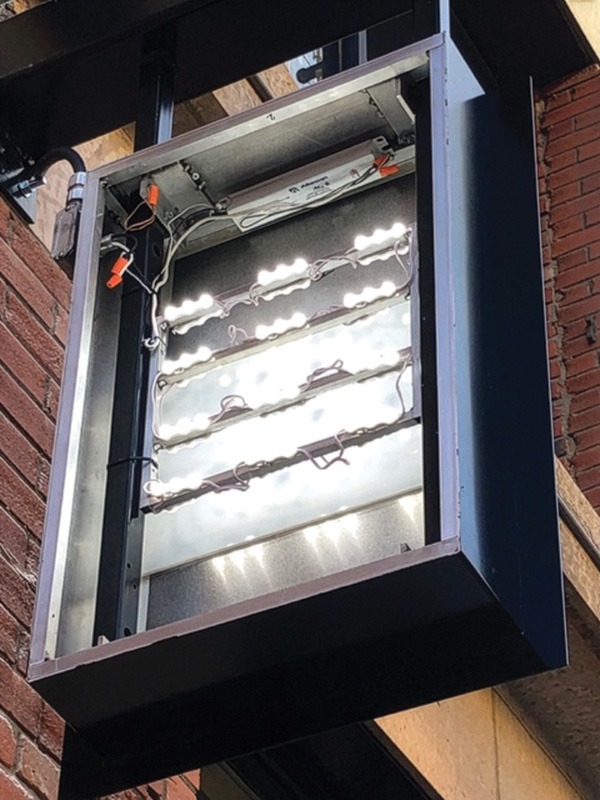
Was the sign built within a recognized certification program?
Did the installer understand the applicable rules?
Was an electrical permit obtained?
Were the workers trained?
Did anyone confirm that the sign was approved before it was energized?
If the little things are managed properly, many larger problems are prevented.
Knowledge changes the customer conversation
Training employees on the applicable standards does more than improve shop and field practices. It also gives them the ability to explain compliance to customers.
Salespeople and project managers do not need to become electrical inspectors. They should, however, be able to explain why an electrical sign requires proper approval, markings, permits, installation, and inspection.
These are not optional upgrades that can be removed to reach a lower selling price.
Installers should know what approval markings to look for before placing a sign on a building. Service technicians should understand the purpose of disconnecting means, bonding, and safe isolation. Designers and fabricators should know that component selection, enclosure construction, wiring methods, and markings all affect whether the finished product can be approved.
The more knowledge a company develops internally, the less likely compliance is to become something added at the end of the project.
It also changes how the company describes its value. Instead of just saying, “This is the price of the sign,” the company can explain:
“This price includes a properly constructed and approved product, the required permits, a compliant installation, and the responsibility to service it safely in the future.”
That is the difference between being viewed as a supplier of a discretionary product and being recognized as a professional service provider.
Certification is an ongoing relationship
Becoming certified is not simply permission to apply a label. It places the manufacturer inside an ongoing system.
Certification bodies onboard manufacturers by explaining construction, labelling, testing, and documentation requirements associated with the applicable product standard. Follow-up inspections then help confirm that the company continues to manufacture signs in accordance with its certification arrangement.
Those inspections should not be viewed only as audits that a shop must pass. They are opportunities to identify changing requirements, correct practices, and maintain knowledge.
A strong relationship with a certification body helps the company understand what it is permitted to build and mark. A strong relationship with the authority having jurisdiction helps the company understand permit, installation, and inspection expectations.
Companies known for quality, integrity, and good documentation are easier for authorities and certification bodies to work with. That does not remove the requirements. It makes the process more predictable and professional.
Different systems can achieve the same goal
Permit and inspection systems are organized differently across Canada.
In some municipalities, sign-permit compliance and electrical inspection are closely connected. A sign permit creates awareness of the electrical portion of the project, while the electrical inspection may also expose missing development or sign permit approvals.
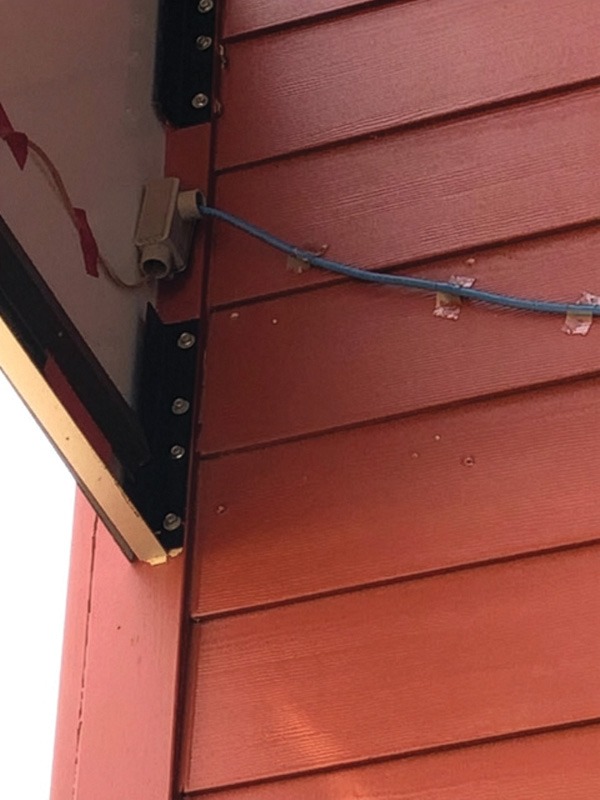
That can create useful efficiencies. Compliance concerns reach permit holders more quickly, final approvals are easier to co-ordinate, and inspectors have a clearer view of the complete project.
In other jurisdictions, the municipality administers the sign permit while a separate provincial organization administers the electrical permit and inspection.
That structure can also work. But it raises an important question: does each authority know whether the other required permit exists? Can this aspect of compliance be simplified and improved? Creative co-ordination can improve compliance while also reducing unnecessary red tape.
If an electrical permit is issued for a new sign, is there a practical way to confirm that the municipal sign permit was also obtained? If a municipality approves an illuminated sign, is there a way to confirm that the electrical permit and inspection will follow?
The answer does not need to be a new layer of bureaucracy. There is no requirement for every jurisdiction to use the same organizational model. There is a requirement for the system to work.
Different structures can succeed, but no important compliance requirement should disappear between them.
Responsibility is shared
Sign companies carry a direct responsibility. They decide what to manufacture, how to wire it, which components to use, whether to obtain approval, and who they send into the field.
But sign companies are not the only participants.
Authorities having jurisdiction administer and enforce adopted requirements. Municipalities and provincial regulators manage permits and inspections. Standards committees develop and maintain technical requirements. Certification bodies assess products and manufacturers. Industry associations provide education and communication. Customers choose which companies they will hire.
Each party sees a different part of the same system.
Standards define expectations. Education develops competence. Certification verifies manufacturing. Permits and inspections support field compliance. Sign companies apply all of it in practice.
The industry performs best when those parties understand their roles, communicate, and are willing to examine where gaps exist.
Consistent monitoring also supports fair competition. Companies that include proper components, certification, permits, inspection, and training should not be disadvantaged against work that avoids those obligations.
Enforcement should not only identify non-compliance after the work is complete. It can also direct companies toward education, field evaluation, certification, and better practices.
The final part of the compliance guide
The purpose of this three-part series has been to improve education and awareness within the sign industry.
Part 1 examined how the Canadian Electrical Code Part I and the applicable Part II product standard perform different but connected functions.
Part 2 examined why structured education is necessary to turn those requirements into safe daily practices.
Part 3, this final article, asks whether the signs being manufactured and installed across Canada consistently reflect that knowledge.
Improving compliance benefits more than one company.
It benefits the installer who goes home safely.
It benefits the service technician who can isolate the electrical supply before beginning work.
It benefits the fabricator who understands why a construction method or component matters.
It benefits the customer who receives a safe and properly approved product.
It benefits authorities that receive complete permit information and inspect work that has been prepared correctly.
It also improves the reputation and performance of everyone employed in the industry.
The sign industry should not be regarded only as a supplier of something a business would like to have. Sign companies provide a professional service that includes design, manufacturing, electrical safety, permitting, installation, inspection co-ordination, and long-term maintenance.
That professional standing is strengthened every time a company builds to the standard, trains its people, obtains the required permits, and supports consistent inspection.
Whether bad signs are viewed as a small issue or a large one is less important than deciding to manage the issue properly. If we manage the details and improve the systems around them, the performance of the entire industry rises.
The questions are straightforward
Do you understand the electrical standards that apply to your work?
Have you invested time in Section 34 and CSA C22.2 No. 207?
Are you manufacturing and installing electrical signs to the applicable standards every time?
Are workers receiving the training they require to perform their work safely and correctly?
Can sign companies, authorities, certification bodies, and associations work together to improve permitting, inspection, education, and compliance?
What standard are today’s industry leaders setting for a safe and professional industry—both now and for the next generation?
Key takeaway: |
| Sign companies provide a professional service that includes design, manufacturing, electrical safety, permitting, installation, inspection co-ordination, and long-term maintenance. That professional standing is strengthened every time a company builds to the standard, trains its people, obtains the required permits, and supports consistent inspection. |
Dale Maron is a journeyman Red Seal electrician and holds a Certified Master Electrician designation in Alberta. He also holds a Safety Codes Officer designation as an electrical inspector in the province. He is vice-chair of the Section 34 Subcommittee, a member of the CSA 22.2 No. 207 Standards Committee, and an Electrical Certificate Training Program (ECTP) instructor. Devin Froese is president of Seventy-Seven Signs, a member of the Section 34 Subcommittee, and a standing member of the Saskatchewan Sign Association.

Sign up for our newsletter
Featuring breaking news from Canada's sign and graphics industry.
Products




Read the Latest Issue

