How the Canadian Electrical Code relates to the sign industry

Many sign companies experience compliance through plant visits, written notices, and approval labels. That can make it seem as though the shop’s obligation is simply to satisfy a certification program. In reality, those programs are only the visible part of a larger system. The foundation is understanding how the Canadian Electrical Code Part I and the applicable Part II sign standard work together.
How does the Canadian Electrical Code relate to the sign industry? It is a simple question with a not-so-simple answer. Sign companies do not operate from only one perspective. They manufacture, install, and service the same sign over its lifecycle. That means the answer is never just “read Section 34” or “follow the label program.” The real answer begins with understanding the difference between Canadian Electrical Code Part I and the applicable Part II product standard.
From a manufacturer’s viewpoint, Part I may not seem as important as it does to an installer in the field. From an installer’s viewpoint, Part II may seem like something the shop or certification body looks after. In practice, many sign companies touch both. If a company wants safe products and smoother approvals, it needs to understand where Part I starts, where Part II starts, and how they connect.
One of the biggest sources of confusion is that many sign companies experience compliance mainly through visits from CSA Group or another certification authority. Representatives come into the plant, review procedures, inspect products, and sometimes issue written notices when something needs to be corrected. Over time, that can create the impression that the company’s obligation is simply to stay compliant with the certification program. That is understandable, but it misses the bigger point. The certification program is the visible approval process. The underlying requirement comes from the applicable Canadian standard.
Part I is more than Section 34
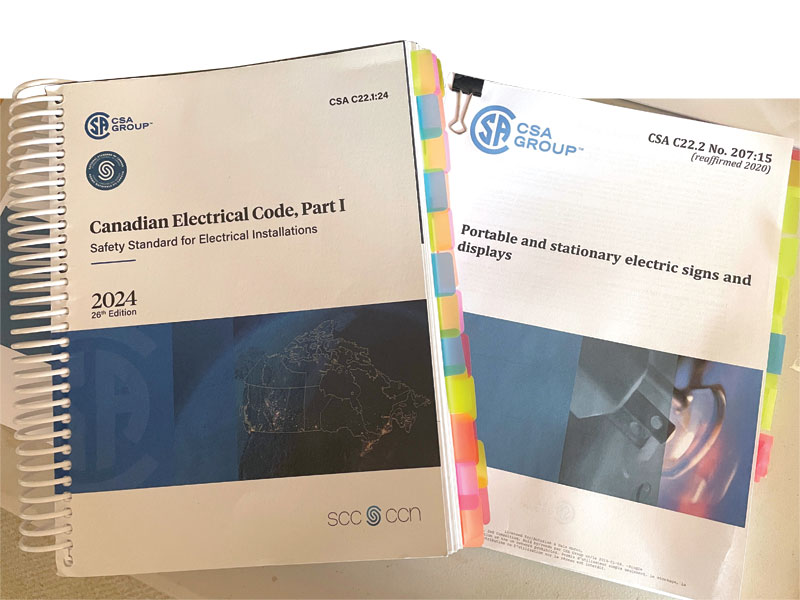
CEC Part I is the code book electricians, technicians, contractors, and inspectors use for electrical installation work. Currently, the national edition is CSA C22.1:24, although provinces and territories adopt new editions on their own timelines. That is why a sign company must always pay attention to the requirements in its own jurisdiction. The code becomes enforceable through local adoption and regulation.
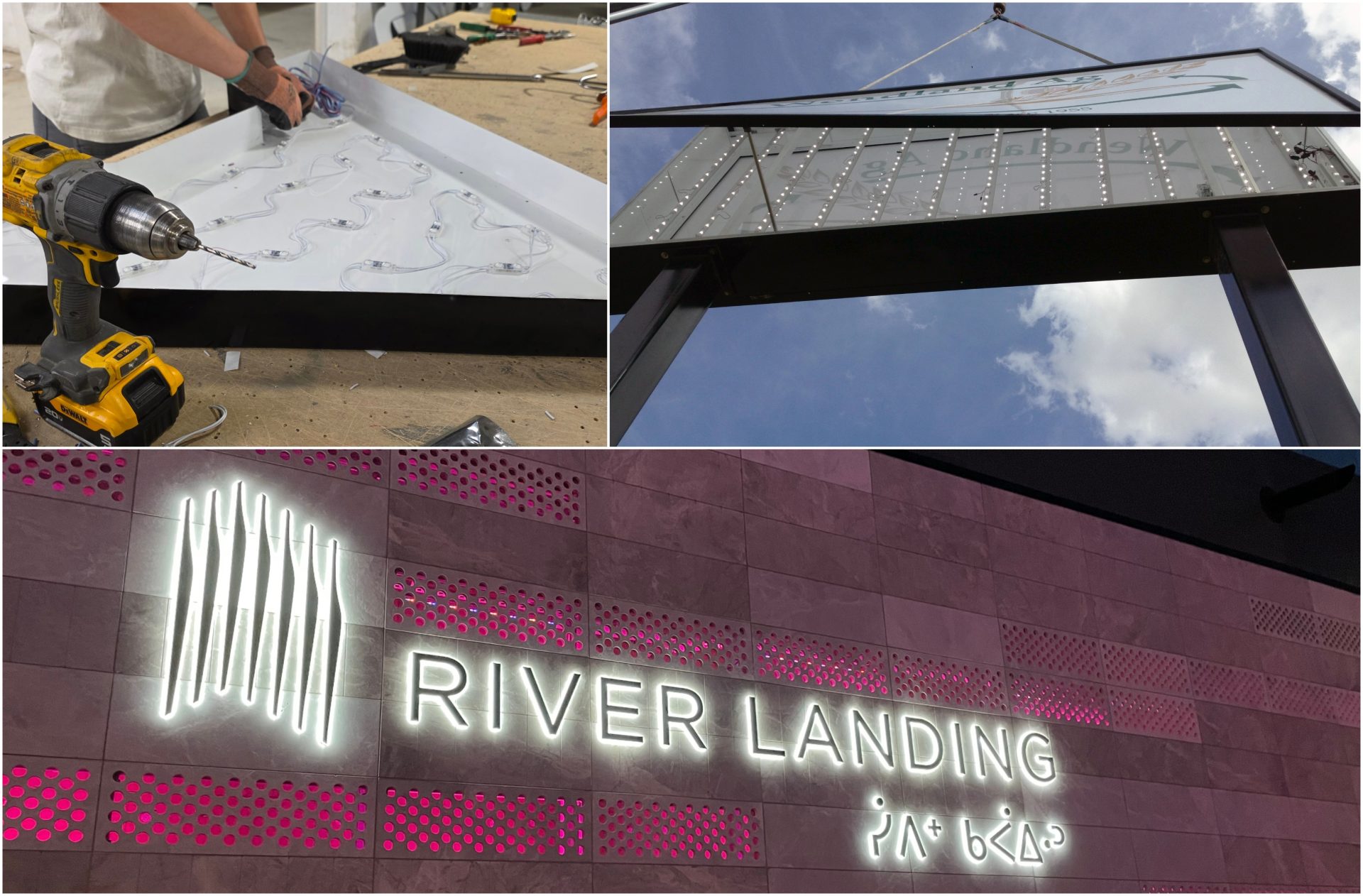
For the sign industry, Section 34, Signs and Outline Lighting, is obviously important. It speaks directly to sign-related installation issues and is often where people start. The problem is when they stop there. Section 34 is a supplementary section, not a stand-alone code book within the code book. The general sections still matter. Sections 0 to 16 and Section 26 contain rules that apply more broadly to electrical installations, and those rules continue to support, qualify, or interact with Section 34. Depending on the work, that may include wiring methods, bonding and grounding, conductor protection, disconnecting means, permits, and work practices.
That is an important takeaway for installers and service technicians. A sign cannot be installed safely by reading Section 34 in isolation and ignoring the rest of the CEC. The code also relies on tables, diagrams, definitions, and appendices that help explain how the rules are intended to be applied. The more complex the sign system becomes, the more important it is to know how to navigate the entire code, not just one supplemental section.
Part II is the standard behind the label
On the manufacturing side, the sign industry’s core product standard is CSA C22.2 No. 207, Portable and stationary electric signs and displays. It sits within the Part II family of standards and addresses how electric signs and displays are constructed for use in Canada. That includes requirements related to materials, enclosures, weather resistance, bonding and grounding, corrosion protection, flammability, markings, and other construction details that affect whether a finished sign can be approved as safe electrical equipment.
This is the point many shops need to hear more clearly: the requirement does not begin with a CSA label or any other approval mark. Those marks matter, and the certification process behind them matters, but they are not the source of the technical requirement. The source is the applicable standard and the approval framework built around it. The factory visit, audit, or written notice exists because the sign must continue to conform to the applicable Canadian requirements that govern how it is built and approved.
That distinction matters because a shop can become very good at passing an audit without fully understanding what sits behind the audit. When that happens, compliance becomes reactive. Staff wait for the next visit, fix the next notice, and continue working by memory or habit. A stronger approach is to understand why the certification body is asking for something and how that ties back to product design, component selection, documentation, labelling, and production controls. Whether a company works with CSA Group, UL Solutions, Intertek, or another recognized approval body, the lesson is the same: do not let the label replace understanding.
Why the distinction matters
This is not just a technical point. It affects daily operations. Many sign companies design, build, install, and service their own work. If the shop does not understand Part II, it may use components or construction methods that create approval problems later. If the field crew does not understand Part I beyond Section 34, it may run into installation issues, permit issues, service problems, or inspection delays. The cost shows up as rework, slower projects, callbacks, rejected installs, and lost confidence from customers or authorities having jurisdiction.
The knowledge gap can also become cultural. In some companies, practices are passed from one worker to the next without anyone checking whether the original method still matches today’s code and standards. That kind of tribal knowledge can work for a while, but it is risky. A worker may know how something has “always been done” without understanding whether it is still correct, or whether it applies to newer products such as LED message centres, digital displays, new power systems, or more integrated control equipment. When knowledge is incomplete, safety can suffer, and so can the reputation of the company and the local sign industry.
The industry keeps moving
There is also a practical challenge: the sign industry evolves quickly. Lighting technologies, electronic controls, display systems, power supplies, and product configurations have changed dramatically over the years. Standards development takes time, public input, committee review, and multiple rounds of technical discussion. As of writing, the active sign product standard remains CSA C22.2 No. 207:15 (R2020), which means many companies are innovating in a market that has moved forward faster than the title page of the standard might suggest.

That does not mean the documents are irrelevant. It means companies need to know them better, follow the applicable approval pathways, and stay engaged with current guidance from their certification bodies, local inspection authorities, and industry organizations. It also means companies should avoid assuming that low-voltage LED work is somehow outside the compliance conversation. If the finished sign is electrical equipment connected to the supply, manufacturing and installation requirements still matter.
Where companies can level up
For companies that want to level up their knowledge and compliance, a starting point is straightforward. Make sure key staff have access to the current editions of the Canadian Electrical Code Part I, not just excerpts or word-of-mouth summaries. Review Section 34, but also learn how the general sections support sign work. On the manufacturing side, obtain the applicable sign standard, review how approval is being maintained in the plant, and make sure supervisors, designers, assemblers, installers, and service staff understand the difference between the source standard and the certification program used to verify it.
Useful resources include CSA C22.1:24 and its handbook, CSA C22.2 No. 207-15 (R2020), guidance from provincial or territorial electrical authorities, electric sign code resources, and training from recognized certification bodies and code education providers. Internal shop procedures and refresher training can then turn that information into everyday practice. Copies of the Code and standards are available through CSA Group’s online store.1
| KEY TAKEAWAY |
| For sign companies, Part I primarily governs installation and field work. Part II product standards govern how electrical equipment is constructed and approved. Certification bodies verify ongoing conformity, but they do not replace the source standard. |
This article is Part 1 in a three-part series aimed at helping sign companies better understand the rules and standards that affect their work. The main takeaway from this first article is simple: Part I and Part II do different jobs, but sign companies need both. Part I is more than Section 34. Part II is more than a label program. When companies understand that relationship, they can build safe signs, install them properly, and protect the credibility of the industry. In the next article, look for a closer examination of the education and training options available to help companies and workers strengthen their knowledge and improve compliance, and some of the processes along the path to becoming a certified sign manufacturer and installation company.
Note
1 Learn more about the Code and standards here: https://www.csagroup.org/store/electrical/.
Dale Maron is a journeyman Red Seal electrician and holds a Certified Master Electrician designation in Alberta. He also holds a Safety Codes Officer designation as an electrical inspector in the province. He is vice-chair of the Section 34 Subcommittee, a member of the CSA 22.2 No. 207 Standards Committee, and an Electrical Certificate Training Program (ECTP) instructor. Devin Froese is president of Seventy-Seven Signs, a member of the Section 34 Subcommittee, and a standing member of the Saskatchewan Sign Association.
Sign up for our newsletter
Featuring breaking news from Canada's sign and graphics industry.
Products


Read the Latest Issue

