
The merch boom: A new playground for print providers
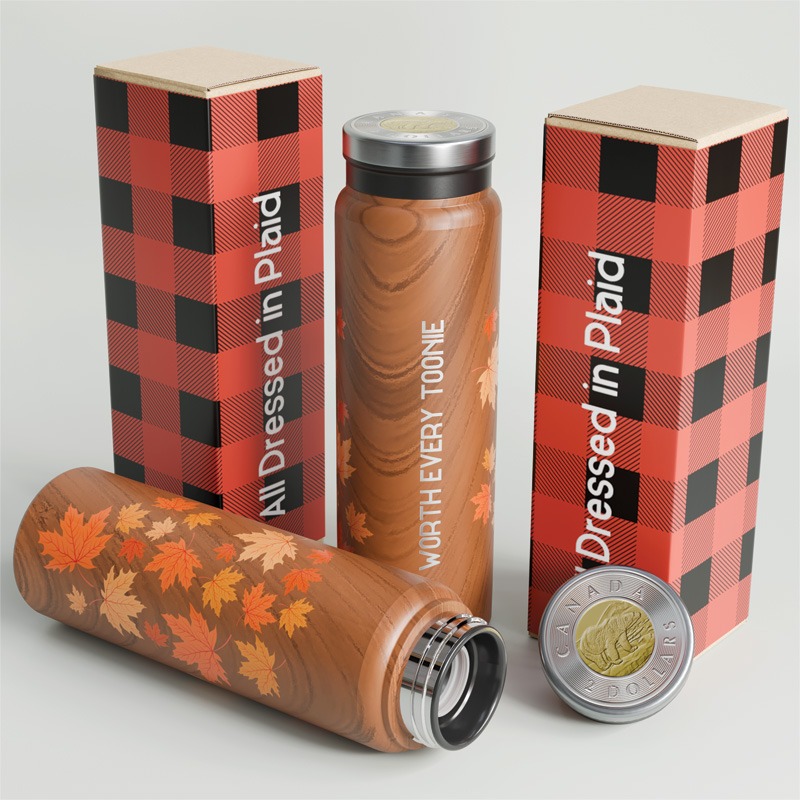
Nineties nostalgia is everywhere, reflected across fashion, music, and social media as consumers look back to the last pre-digital era. And from a look at trends, it seems marketers are riffing on the ‘90s, too, tapping into experiential marketing and looking for physical touchpoints to cut through the digital noise.
Real-world connection
Whether through email overload, social media binges, or triple-screening as they unwind on the couch, every generation is experiencing unprecedented levels of digital fatigue, with more than three-quarters of Gen-Z and Millennials reporting that they often wish to digitally disconnect.1 Indeed, growing numbers of TikTok and Instagram videos are popping up extolling the virtues of going “chronically offline,”2 and even printed holiday shopping catalogues are making a comeback.3
Consumers are looking for real-world connection, and marketers are adapting their strategies to meet them where they are, with a 2024 report from Event Marketer magazine having found that 74 per cent of marketers were planning to increase their spending on experiential marketing.4 This is hardly surprising when you consider that the same research also found that two-thirds of event attendees feel more favourable towards a brand after engaging with them in a live event.5 Additionally, some 2025 research into holiday shopping by market research firm, The Harris Poll, for marketing experience company Quad found that 71 per cent of respondents feel more present and less distracted by their phones when shopping in-store, and 74 per cent prefer in-store shopping for getting into the holiday spirit.6
Brands are quickly capitalizing on this return to the real world with pop-up stores and in-store events designed to increase customer engagement and potentially garner social media shares along the way. In the December 2025 holiday season, for example, cosmetics brand Lush Cosmetics invited shoppers in Boston, Mass., to customize their shower gel purchases live in-store. Using Antigro Designer software paired with Inkcups’ Helix ONE cylindrical inkjet direct-to-object printer, shoppers were able to add a name or a phrase to their chosen shower gel bottle, and the design was then printed on the spot. This wasn’t mass customized packaging, but live, on-demand personalization that allowed shoppers to create unique gifts and the brand to create an “Instagrammable” in-store experience.
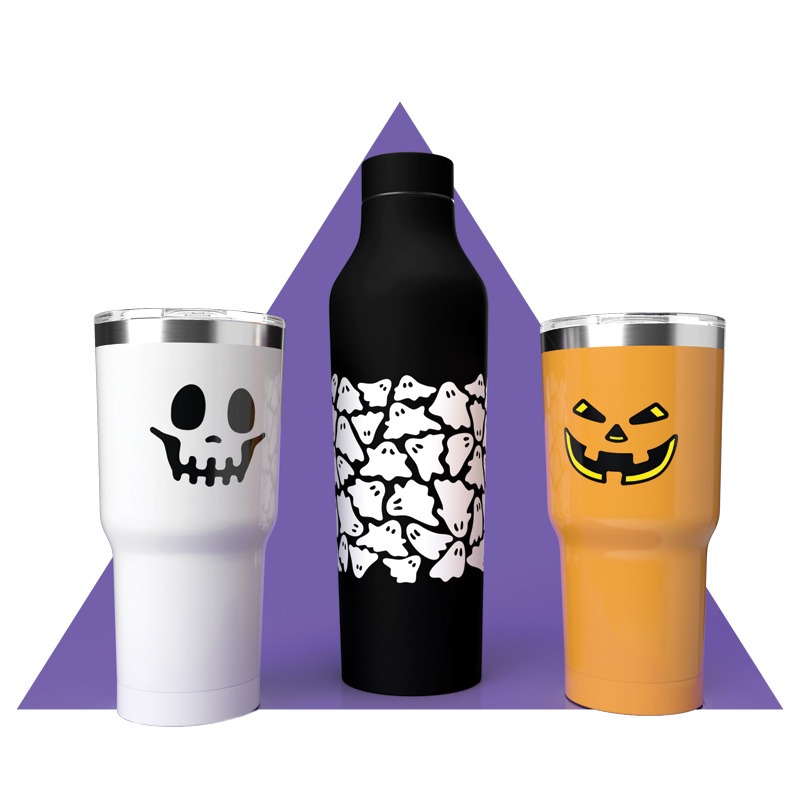
Naturally, the growth of experiential marketing is great news for the signage and wide-format print specialists who create the graphics and environments needed for brand activations and live events. It also creates an opportunity for these same businesses to expand their service offering into promotional merchandise, packaging, and the myriad other products that are becoming part of experience design. Here’s how.
A touchpoint in the branded experience
There may be a lot of ‘90s throwbacks around, but just as event graphics are a world away from what they were then, promotional products in 2026 look nothing like they did three decades ago. The days of bulk-buying inexpensive items, adding a logo, and using them for every event and promotion are long gone. Today’s brand owners and consumers expect a more tailored approach, and merchandise has become about premium, custom pieces that are part of the overall experience.
While writing this article, we spoke with Alan Meinstein, CEO of Spector & Co, a Montreal-based trade supplier of promotional products and an Inkcups customer. He said: “Historically, the industry was associated with ‘trinkets and trash’—cheap, disposable items—and even the term ‘swag’ reflects that mindset. Now, there’s much more thought and intention behind merchandise. We’re seeing more sophisticated decoration, with subtle, elegant branding, and the line between promotional merchandise and retail has blurred significantly. Brands are looking for products that align with their identity, and which let them tell a story through merchandise, rather than just handing out random items.”
Part of this stems from a rediscovery of the importance of physical touchpoints in experiential marketing as people tire of time in digital worlds. Human beings want tactile experiences, and in many cases, branded merchandise is an opportunity to connect with people by giving them a way to feel or experience a brand that engages more senses than purely the visual. It is even suggested by some research that touch can increase valuation and sense of ownership,7 which in turn could lead people to value a brand more highly just by virtue of holding its merchandise.
If you visit any tradeshow or conference today, you can clearly see this playing out among brands that are trying to build connections. Branded items are being thoughtfully curated as a reward for participation in an experience, an unusual item to drive social media engagement in real time, or even an enticement to spend more time interacting with an installation. For example, one of our customers recently used direct-to-object printing to brand and personalize cans of soda live at a trade show. And in 2024, visitors to the Inkcups booth at PRINTING United Expo were able to use Antigro Designer software to personalize latte cups with cut-outs of their own face before having them printed on our booth instantly.
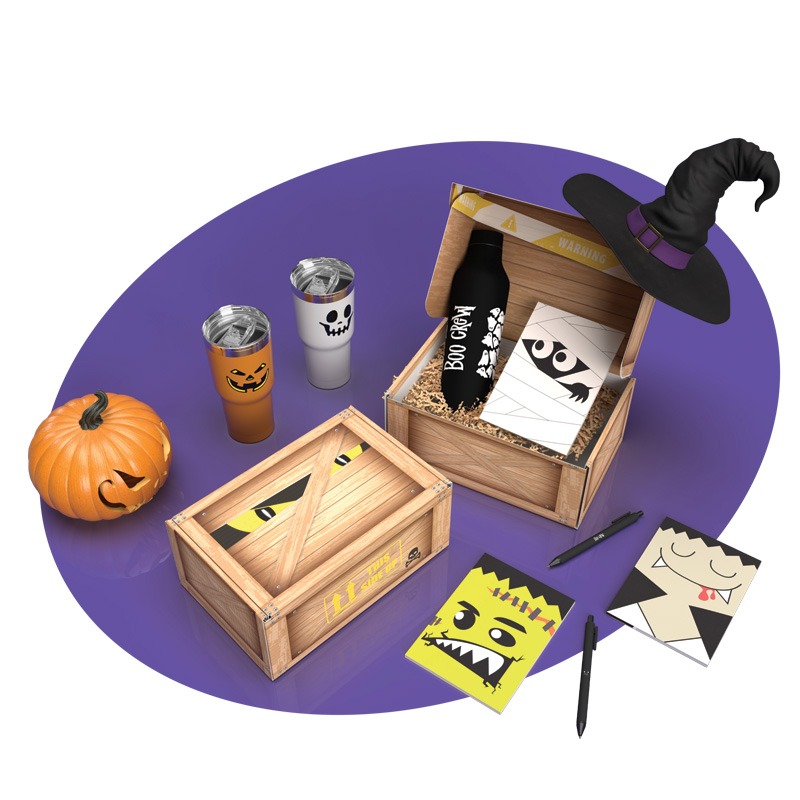
This experiential shift is something our promotional merchandise customers are seeing a lot of, too. Spector & Co, for example, is often asked to put together drinkware alongside a journal, pen, or bag, all packaged together in a gift box to create an unboxing experience that might be used at an internal company event, at trade shows, or in other experiential activations.
Convergence creates opportunities
Signage and wide-format print service providers operating in events, retail, and display graphics will be only too familiar with the experience-first environment. And as so much of the print industry begins to overlap and even converge, many are exploring ways to integrate merchandise into their offerings. Not only are promotional products an excellent “upsell” opportunity, but they can also be a way to deepen customer relationships by becoming more of an experiential marketing partner than a graphics supplier.
Skilled signage and graphics practitioners already work within brand guidelines and understand the importance of colour accuracy. Many also collaborate regularly with creative agencies and brand managers. Some may even be able to leverage some of their existing technology, such as using wide-format flatbed printers to decorate blank promotional items if the surface is rigid and the item is only a few inches tall.
However, for those looking to capitalize on the growing demand for premium and customized merchandise to enhance their experiential and activation work, a good first step may be to consider building partnerships with providers that offer promotional product decoration. This not only gives access to a wider range of technology but also enables businesses to tap into these partners’ skillsets and supplier networks, immediately expanding the options they can offer customers.
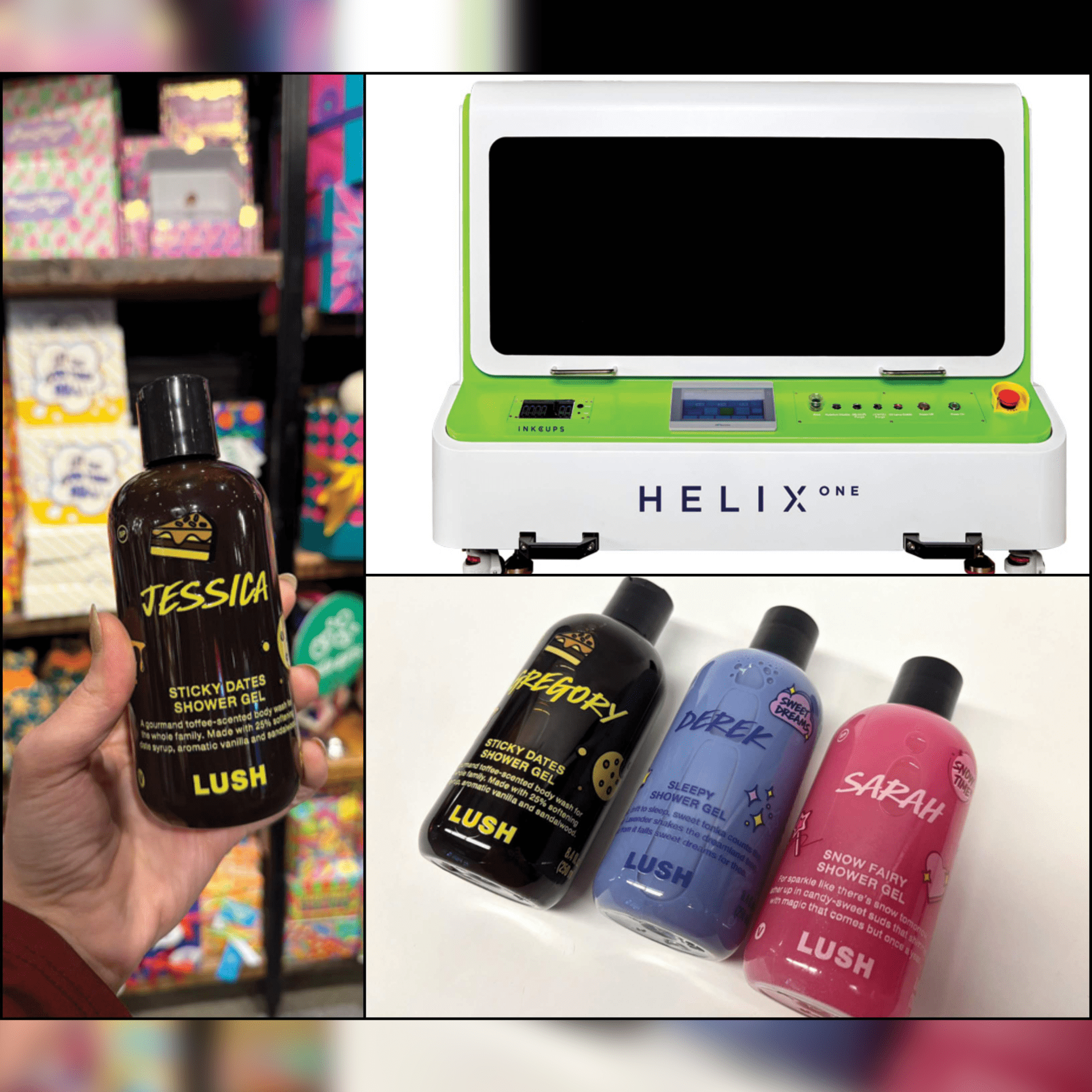
There are also entry-level technologies that enable businesses to decorate promotional merchandise in-house more easily. The Helix ONE benchtop cylindrical direct-to-object UV printer, for example, lowers barriers to entry into drinkware printing by opening up the possibility of photo-quality, full-colour, 360-degree graphics on everything from shot glasses, pint glasses, and reusable coffee cups to candle holders and spirits bottles. Technologies such as this make it possible to scale up capabilities in a modular way, based on customer demand.
In recent years, the industry has often touted wide-format print as a golden ticket, but as experiential marketing grows in popularity and the worlds of print and promo converge, branded merchandise may enable wide-format specialists to move beyond job-by-job selling and differentiate themselves by offering all-in-one solutions that bring their clients’ brands to life.
Notes
1 Read Arielle Feger’s Younger generations are feeling digital fatigue. eMarketer. June 25, 2025. https://content-naf.emarketer.com/gen-z–millennials-feeling-digital-fatigue
2 Learn more about Sawdah Bhaimiya’s insights on A ‘quiet revolution’: Why young people are swapping social media for lunch dates, vinyl records and brick phones. CNBC. February 7, 2026. https://www.cnbc.com/2026/02/07/young-people-quiet-revolution-social-media.html
3 Discover The Return of Touch Report: Holiday Shopping, Reconnected. May 13, 2025. https://www.quad.com/resources/research-and-tools/return-of-touch-consumer-engagement-has-an-omnichannel-revival
4 Read more: EventTrack 2025. Event Marketer. October 24, 2024. https://www.eventmarketer.com/article/eventtrack25/
5 Read more: EventTrack 2025. Event Marketer. October 24, 2024. https://www.eventmarketer.com/article/eventtrack25/
6 Learn more: The Return of Touch Report: Holiday Shopping, Reconnected. The Harris Poll & Quad. October 30, 2025. https://www.quad.com/insights/consumer-insights/why-consumers-are-turning-to-in-store-shopping-and-catalogs-this-holiday-season
7 Discover Joann Peck, Suzanne B. Shu, ‘The Effect of Mere Touch on Perceived Ownership, Journal of Consumer Research,’ Volume 36, Issue 3, October 2009, Pages 434–447, https://doi.org/10.1086/598614
Jessica Makrinos is the marketing manager at Inkcups.
Sign up for our newsletter
Featuring breaking news from Canada's sign and graphics industry.
Related Products

Read the Latest Issue
