
Has the line between signmaking and reputation management blurred?
In military radar systems, operators talk about “ground clutter,” which is the static, unchanging objects that get filtered out so you can focus on what’s actually moving toward you. However, those static objects sometimes become threats. In other words, the thing you stopped watching is the thing that gets you.
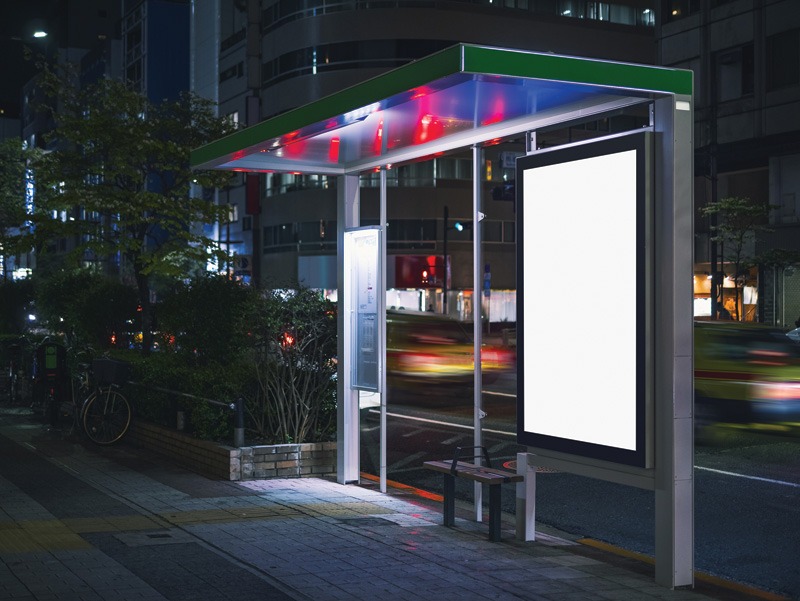
Both brand signage and out-of-home (OOH) advertising, when not actively managed or planned in alignment with broader messaging—i.e., without “reading the room”—have the potential to become ground clutter. The roadside billboard, too, can create reputational risk, though responsibility differs. OOH advertisers control their campaigns, while brand signage is managed by the client and the sign professional.
The static asset problem
I’ve spent years studying how threats emerge and propagate across media environments—and how often physical signage becomes part of that story. This pattern is clear for OOH media, while brand signage faces similar risks if messaging isn’t updated or context aware. I even managed some OOH ads when working at Randstad in a PR capacity years ago. I loved it. With the added context of a short-form video on TikTok, I’d have loved it even more, aside from the risk.
The mechanism is simple. Public sentiment shifts constantly, potentially hourly, during major news events. Brand messaging, particularly visual messaging in physical spaces, changes on cycles measured in weeks or months. That gap between sentiment velocity and asset velocity is where reputational damage happens and affects both OOH campaigns and signage, though the latter can be adjusted proactively by signage operators.
OOH case studies
The dating app Bumble walked right into a crisis with a 2024 OOH campaign that attempted to target dating fatigue. Instead, the brand angered women (its target audience). The rebrand was unsuccessful, and the campaign prompted an apology.
At the same time, bad ad writing gets annihilated for being just that—bad. You can’t always blame the prevailing winds for missing your drive from the fairway. Realtors in Ontario learned this the hard way in 2020, with their Real Estate Ninja’s ad, which generated headlines for the wrong reasons. These OOH case studies illustrate context risks that can also inform brand signage strategy.

Threat surface expansion
In cybersecurity, “attack surface” refers to the number of access points where something can go wrong. In signage terms, it’s the number of places your client’s message shows up in public—and can be photographed, shared, or misinterpreted.
Brand signage has expanded its attack surface significantly over the past decade, and organizations must update their defensive posture to keep pace.
Consider the threat vectors that now apply to standard signage installation:
- Direct photography and social sharing. Every sign exists simultaneously in physical space and as potential viral content. A single smartphone turns any display into a broadcast.
- Context collision. Messaging designed for one circumstance encounters an entirely different circumstance. The cheerful “We’re cooking with gas!” restaurant promotion lands during pipeline explosion coverage.
- Temporal mismatch. Campaign timing that made sense during planning becomes problematic at execution. Think holiday messaging installed too early or left up too long can feel dated, while celebratory displays that overlap with a tragedy can quickly appear tone-deaf.
- Geographic sensitivity. National messaging can read differently in specific local contexts. What works for Mississauga, Ont., transit display ads may not be effective in other markets.
- Permanence as evidence. Unlike digital communications that can be deleted or modified, physical signage creates durable evidence of brand positioning that critics can document and reference indefinitely.
Each of these vectors represents a monitoring requirement that most organizations haven’t assigned to anyone. PR watches media mentions. Marketing watches campaign performance. Facilities manages physical assets. If no one is connecting PR, marketing, and on-site signage, who’s keeping an eye on signs? As immersive installations
become bigger and more intricate, this challenge moves front and centre.
Early warning systems
The solution isn’t to treat every sign as a potential crisis. That’s operationally impossible. The solution is to build early warning capability, the ability to detect when conditions are shifting in ways that might affect how existing visual assets are perceived.
Think of it like radar coverage. You’re not trying to track every object in the sky. The goal is spotting which signs could draw attention for the wrong reasons before they become a bigger issue. What messages are live in the market, and what challenges could they present, if something changes?
For both OOH campaigns and brand signage, those signatures include:
- Narrative or sentiment emergence. When certain themes begin to consolidate in media coverage narrative patterns (such as corporate greed, environmental negligence, and labour exploitation), any visual messaging that could be interpreted through that lens becomes a liability. The sign didn’t change. The interpretive framework around it did. The same applies to brand-specific sentiment. Even a playful sign can backfire if public perception of the brand changes.
- Local event triggers. National monitoring often misses hyperlocal developments that affect specific installations. A facility announcement, a community incident, or a regional news story can significantly impact how local audiences perceive nearby signage.
- Calendar convergence. Predictable events, such as elections, holidays, awareness months, and earnings cycles, create windows when certain messaging is more sensitive. Viral news, public health emergencies, and natural disasters require real-time threat detection and a clear playbook to ensure relevant creatives are updated quickly.
Sign professionals know their local markets better than corporate communications teams. They are on site. They see what’s happening in the community. That ground-level awareness has monitoring value that must be formalized into client relationships.
The detection-to-response gap
Identifying a threat is only valuable if you can respond before it has an impact. A typical scenario starts with someone in PR seeing a problematic juxtaposition between current events and existing signage. They flag it internally. A discussion begins about whether to take action. Approvals are sought. By the time a decision is made, the social media damage is done.
The problem isn’t detection speed. Modern media monitoring can identify emerging issues in near real-time. The problem is response architecture.
This is where sign professionals can protect their clients—and their own work—by spotting potential issues early and keeping messaging aligned.
Before installation of on-premise digital signage, governance must be defined—though the responsibility differs by role. For fabricators and installers, content control may sit entirely with the client. For sign companies that manage digital networks, lease displays, or handle client content, consider:
Modification authority. Who can authorize changes to the content? What circumstances trigger that authority?
Response messaging. What alternative content is available to deploy if the primary messaging becomes problematic?
Escalation protocols. How does information about potential visual asset liabilities reach the people who can act on it? Does your team have a direct line to the client’s crisis function?
Takedown thresholds. What triggers can lead to an automatic review of related visual assets?
The benefit of this preparation is the ability to act opportunistically.
Predictive positioning
The most sophisticated threat detection is predictive. No magic ball needed, just a pen and paper exercise to help build more resilient messaging.
Ask yourself a few extra questions in your planning phase:
- What events would make this message read as tone-deaf?
- What is this campaign’s shelf-life? Longer installations need more durable messaging. When clients partner with sign professionals, think buttercream instead of whipped cream.
- What’s the worst interpretation a hostile observer could make? Imagine someone reading the sign with a critical eye—what could they misinterpret about your work, and how might it reflect on your client? This adversarial review catches vulnerabilities that friendly eyes miss.
Integration, not replacement
I’m not suggesting signage professionals need to become crisis communications experts. That’s a specialized discipline with its own training and experience requirements. However, lessons from OOH monitoring inform best practices, particularly for brand signage, where signmakers have direct control. I suggest the traditional separation between people who make signs and people who manage reputation no longer reflects how brand risk actually operates.
Signmakers are increasingly seen as strategic partners, offering insight and expert advice on content, messaging, and how to best communicate a brand’s identity across everything from commercial signage to immersive environments.
This shift positions them as essential collaborators in managing brand perception from the outset. The brands that survive reputational turbulence aren’t the ones that never face criticism; instead, they are the ones that manage it effectively. The radar works better when everyone is watching the same screen.
James Rubec is vice-president of Products at Fullintel, specializing in crisis management and AI-driven threat detection. He collaborates with clients on the Fullintel Hub with AI functions like PredictiveAI—a machine-learning solution for predicting media virality. He is an industry leader in innovative data storytelling on media influence. With experience as senior director of Product Management and director of Content and Licensing at Cision, he excels in designing PR technology workflows that save time. Rubec has used data to predict elections, uncover trends and improve business processes, with work featured in outlets including The Financial Post, Yahoo Finance, Variety and the CBC.

Sign up for our newsletter
Featuring breaking news from Canada's sign and graphics industry.
Products



Read the Latest Issue
