
New land acknowledgement sign greets visitors at Winnipeg airport
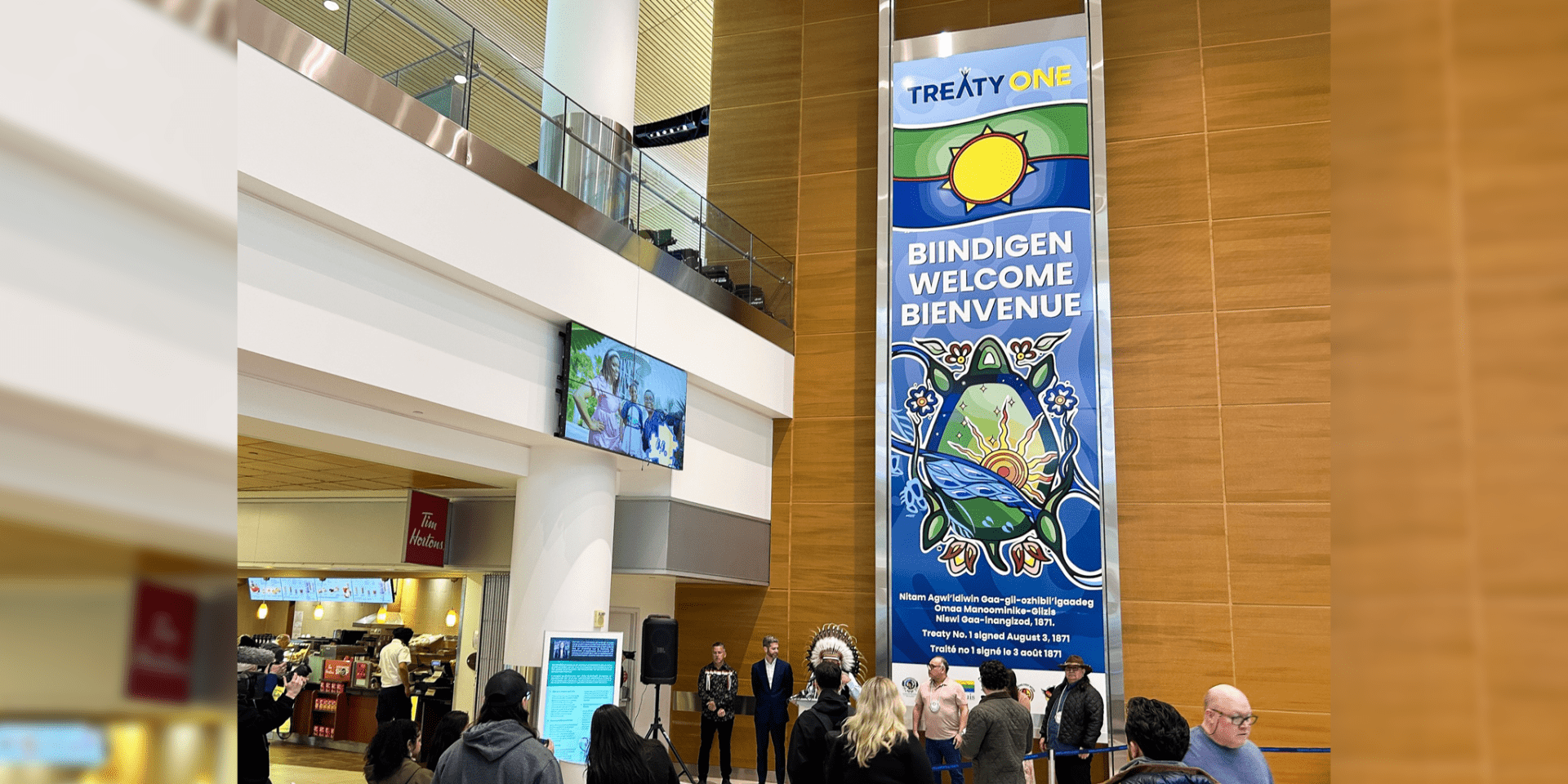
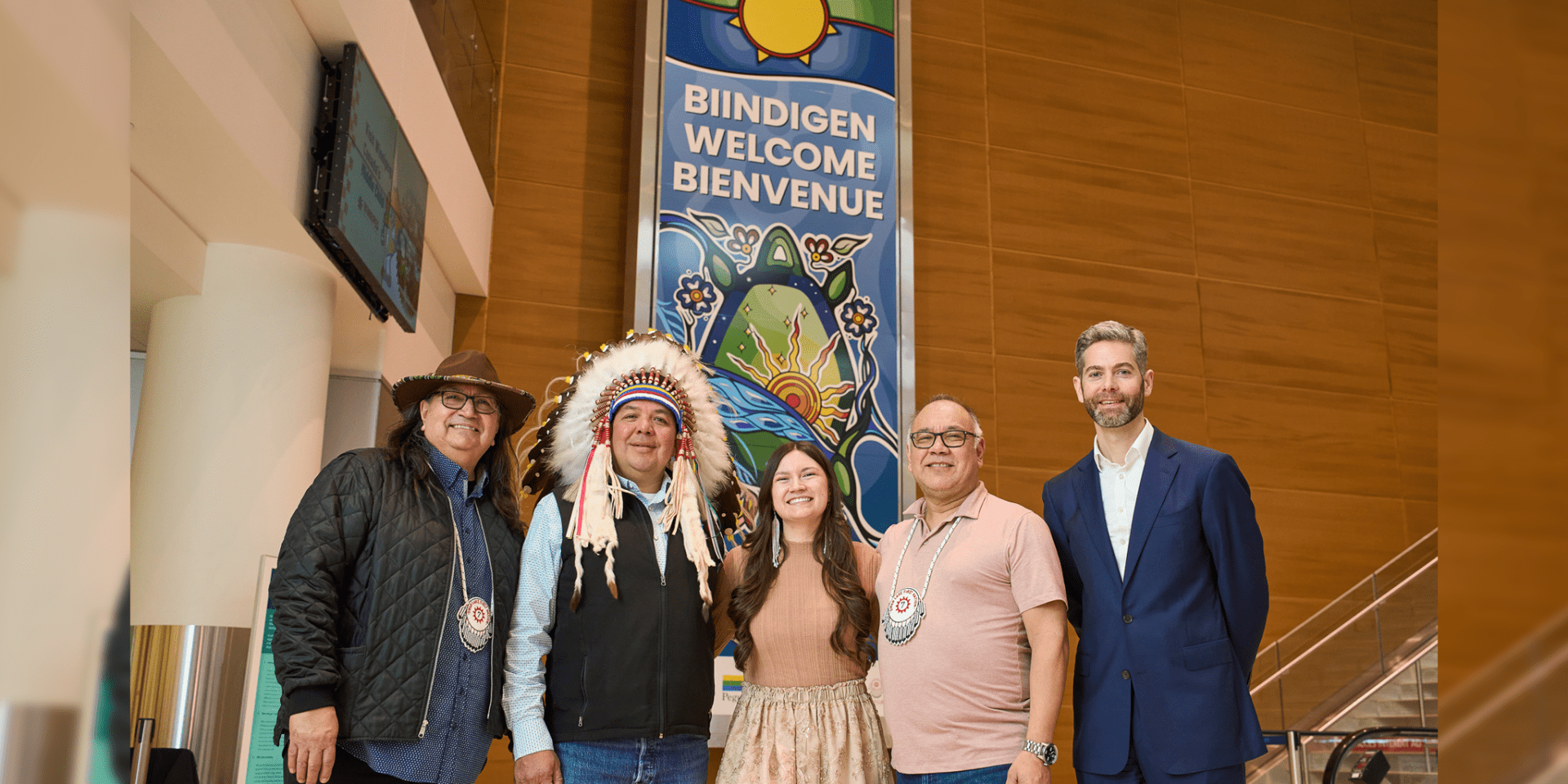
Winnipeg Airports Authority and Treaty One Nations have unveiled a permanent land acknowledgement sign and raised the Treaty One flag at Winnipeg Richardson International Airport, visibly recognizing Treaty 1 territory within the terminal.
They have placed the installation at the bottom of the escalator in Arrivals beside the Hug Rug, where it greets passengers as they enter Manitoba. Working collaboratively, the partners developed a permanent land acknowledgement message presented in Anishinaabemowin, English, and French. The installation reflects the First Peoples of the region while also recognizing the Treaty relationship and its history.
‘A proud moment’
“This permanent land acknowledgement at Winnipeg’s Richardson International Airport is an important step in ensuring that the Treaty’s intent to share the land is recognized and respected where visitors first set foot in our territory. It is a proud moment for our seven Nations, and a reflection of the enduring spirit of the Treaty made in 1871,” said Chief Gordon BlueSky, chairperson of Treaty One Nations.
“We are grateful to Treaty One Nations for their partnership in bringing this to life,” said Nick Hays, president and CEO of Winnipeg Airports Authority. “As the place where many people first arrive in Manitoba, it is important that we clearly acknowledge the land we are on. This installation reflects our responsibility to ensure our spaces do so in a way that is clear, visible, and lasting.”
Sign up for our newsletter
Featuring breaking news from Canada's sign and graphics industry.
Popular Articles
-
1
-
2
-
3
-
4
-
5
Read the Latest Issue

