
Help in sight: UWindsor’s waterfront signs deliver a lifeline
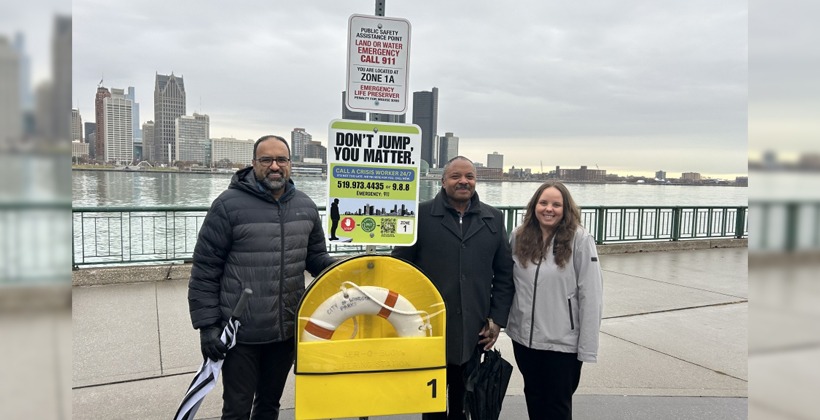
The University of Windsor (UWindsor) has partnered in a first-of-its-kind safety initiative aimed at preventing drownings and suicide attempts along the Detroit River waterfront.
Launched on November 18, the Lifeline Windsor Project brings together Windsor Police Service, the Canadian Mental Health Association Windsor-Essex, the Windsor-Detroit Bridge Authority, Port Windsor, the City of Windsor, and UWindsor. Central to the initiative are COMPASS Stations—multi-purpose safety hubs featuring life buoys, GPS-coded location markers, QR codes linking to 24/7 mental-health supports, and crisis-intervention signage designed to provide clear, immediate guidance to those in distress.
UWindsor played a key role in shaping the signage. Its Special Constable Service, Student Health, Counselling & Wellness Services, and the Office of the Vice-President, People, Equity & Inclusion contributed expertise in public safety, mental health, and suicide prevention. The University led a consultation engaging 45 campus community members, including students, staff, faculty, clinicians, and individuals with lived experience. Their feedback informed the language, layout, and universal imagery used to ensure the signs convey their message clearly to everyone, including non-English speakers.
‘You are not alone’
“Our community told us what messages resonate and what signage elements will be most impactful in moments of distress,” said Mike Akpata, superintendent of UWindsor’s Special Constable Service. “This project aims to reach people in crisis with immediate access to mental health support and a simple but powerful message: You matter, we care, and you are not alone.”
Dr. Mohsan Beg, director of Student Health, Counselling & Wellness Services, highlighted the signage’s role in meeting people “where they are.” He said, “When someone is seriously thinking of taking their own life, they may be feeling an overwhelming sense of hopelessness, worthlessness, or despair. This signage provides direct language that speaks to that pain while offering a lifeline of hope by accessing help in that critical moment.”
Plans are underway to expand the initiative, with crisis-intervention signage set to be installed on the UWindsor campus and at the Gordie Howe International Bridge, funded through the Gordie Howe International Bridge Community Benefits Plan.
The University also developed the content for the Lifeline Windsor Project website in partnership with the Windsor-Essex County Suicide Prevention Coalition, drawing on its “It Matters that You’re Here” suicide-prevention initiative.

Sign up for our newsletter
Featuring breaking news from Canada's sign and graphics industry.
Popular Articles
-
1
-
2
-
3
-
4
-
5
Read the Latest Issue

